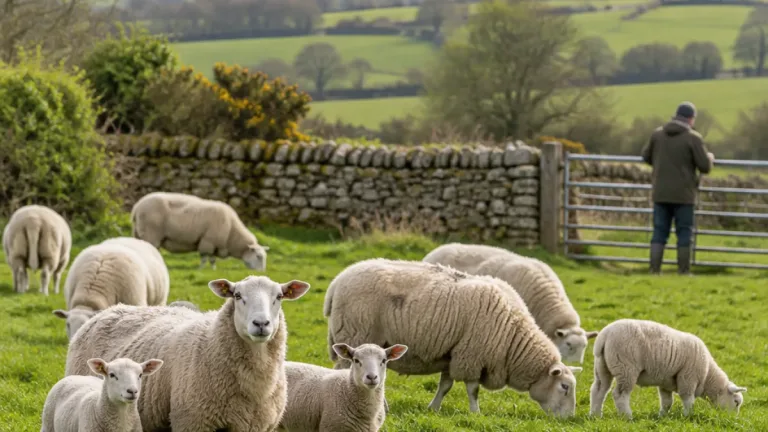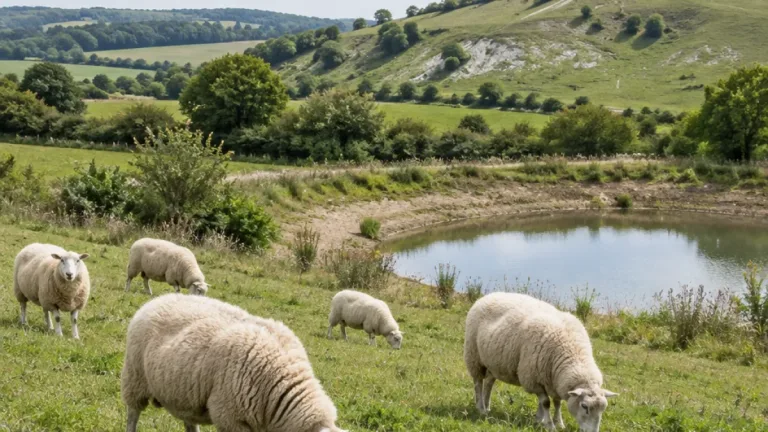
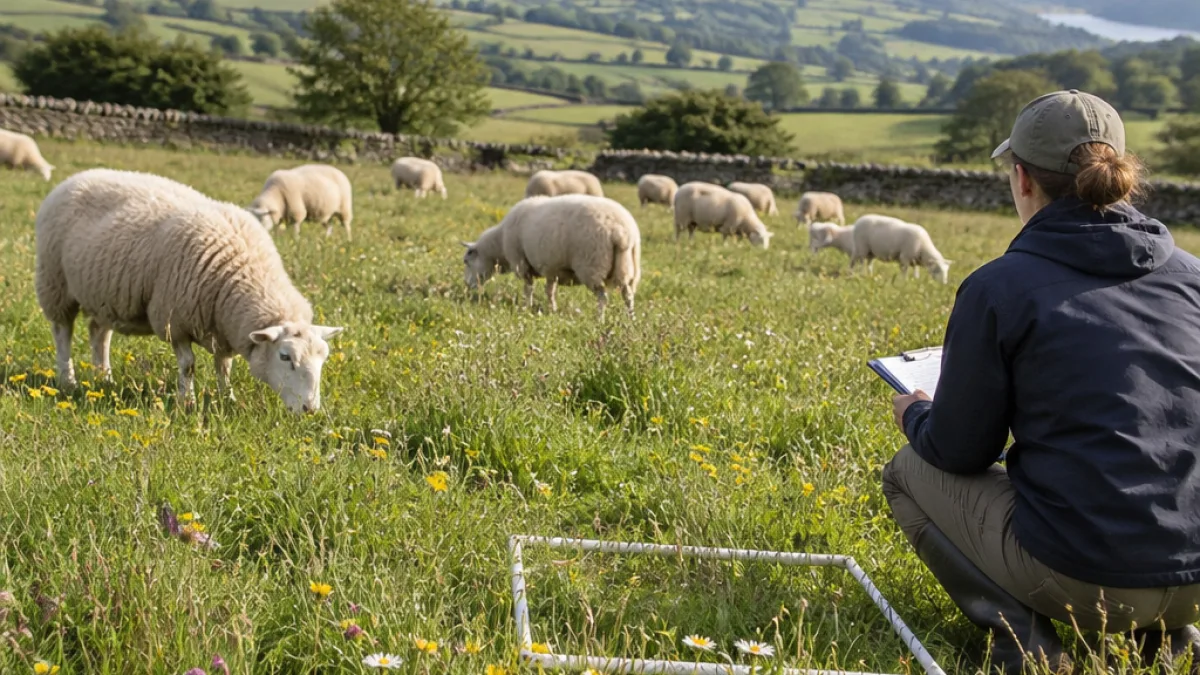
A seven-year grazing experiment in the semiarid grasslands of Northeast China has shown that sheep change the way they feed according to the plant community around them. The research, published in Ecological Processes by Yue Huang and colleagues at the Chinese Academy of Sciences, examined how grazing behaviour interacts with long-term changes in vegetation.
The study used the principles of optimal foraging theory to assess how sheep balance the nutritional value of available plants against the time and energy required to find and eat them. Its findings suggest that sheep are not simply responding to the quantity of forage. The diversity, distribution and nutritional content of the vegetation also influence which plants they select and how efficiently they graze.
Different vegetation produced different grazing strategies
In areas with a high number of plant species, sheep were found to feed selectively, concentrating on preferred forbs and legumes. That feeding pattern reduced competition faced by less palatable perennial grasses. The grasses were therefore able to increase their presence within the local plant community, while plant diversity declined and overall primary productivity rose.
The pattern was different in grassland patches with fewer plant species. There, sheep moved away from specialised selection and adopted a more efficient approach, eating dominant perennial grasses alongside other available vegetation. By reducing the advantage held by the dominant grasses, this behaviour helped to support wider plant diversity.
- In species-rich grassland, sheep focused more heavily on preferred forbs and legumes.
- In species-poor areas, sheep consumed dominant grasses as well as other vegetation.
- The two grazing responses produced different effects on plant competition and species coexistence.
Implications for dryland pasture research
The researchers describe the relationship as a top-down feedback mechanism: sheep alter the balance of plant species through grazing, while the changing plant community affects the animals’ subsequent feeding decisions. The findings add a behavioural dimension to studies of livestock and rangeland vegetation, rather than treating grazing pressure as a fixed force applied uniformly across a pasture.
Large domestic herbivores can change rangeland vegetation through selective defoliation, but the study also highlights that their behaviour varies when forage becomes more or less abundant, nutritious or widely dispersed. In the experimental grasslands, the animals’ choices influenced whether dominant plants retained their competitive advantage or whether a wider mixture of species was maintained.
The work addresses a long-standing challenge in managing fragile dryland ecosystems: understanding how livestock behaviour and plant communities affect one another over time. Its conclusions concern semiarid grasslands in Northeast China and describe the results of the research experiment; they do not establish a grazing prescription for UK farms. However, the study provides evidence that the ecological effect of sheep grazing depends not only on the number of animals present, but also on the vegetation they encounter and the way they respond to it.