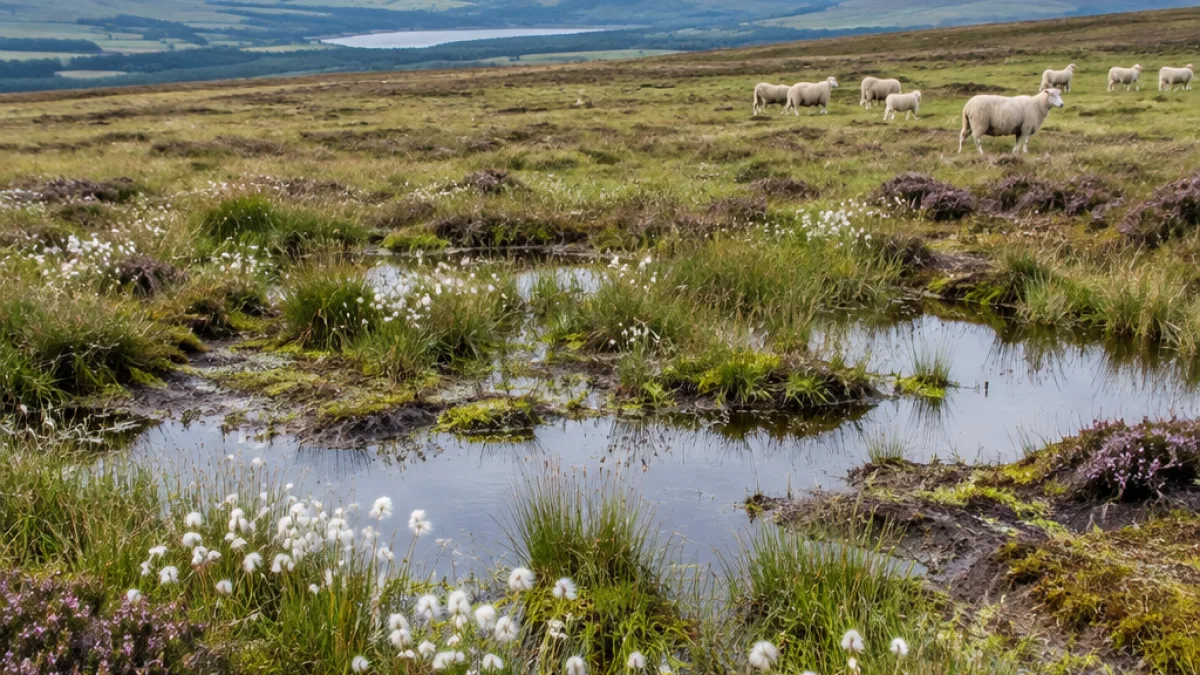
Severely eroded blanket bog at Fleet Moss in North Yorkshire has undergone a major restoration effort, reversing some of the damage caused by drainage and the loss of vegetation cover. The upland site, a steep climb from Hawes near Yorkshire’s highest road, was once described locally as “the Somme” because of its dark, broken ground and channels carrying peat and water downhill during heavy rain.
The work has been led through the Yorkshire Peat Partnership, a collaborative organisation focused on restoring and protecting blanket bog across North Yorkshire. The condition of Fleet Moss helped prompt the partnership’s creation, after its landscape became one of the most difficult areas assessed for restoration.
From exposed peat to recovering bog
Jenny Sharman, a restoration officer involved with the site, recalled the instability of the peat before work began. She said that, in places, the surface was moving like a slow eruption, with topsoil and peat shifting across the hillside. The exposed ground left the bog vulnerable to further water loss and erosion.
“On one part the peat was moving, it was kind of like a very slow liquid volcano eruption of this moving top soil.”
Historic drainage channels, known as grips, had been cut into the blanket bog to remove water and make the land more suitable for sheep grazing. According to Ms Sharman, extensive grip construction in the 1970s allowed water to drain rapidly from the peat. Grazing also contributed to the loss of the vegetation that had protected the surface.
The sheep removed grasses and herbs that formed a covering over the peat, leaving it open to the weather. Tracks along a fenced boundary then acted as additional routes for flowing water, adding to the erosion problem. The account highlights how changes intended to improve grazing conditions can affect the hydrology of upland peat over time.
Restoration required difficult access
Survey work began in 2018, when the restoration team walked across the entire area. The site presented considerable practical challenges because of its steep and damaged terrain. Helicopters were required to move materials into position, while more than 26km of gullies had to be reprofiled as part of the repair work.
- Historic grips drained water rapidly from the blanket bog.
- Loss of vegetation exposed peat to erosion from rainfall and surface water.
- Helicopters were used to deliver materials to the difficult upland site.
- More than 26km of gullies required reprofiling.
Visible signs of recovery now include cotton grass and green heather across areas that were previously blackened and bare. The restored bog has also provided habitat for a wider range of species, including dragonflies, sundew and short-eared owls, which breed on the uplands.
Implications for upland management
Fleet Moss demonstrates the scale of intervention that may be needed where peat has been drained, eroded and affected by grazing pressure. For sheep farmers, the history of the site also underlines the connection between grazing management, vegetation cover and the condition of the wider hill environment.
The restoration has not been presented as a simple removal of one pressure. It has involved repairing water flow, stabilising gullies and bringing materials to remote ground, alongside the ecological recovery now visible on the hillside. The result is a landscape where blanket bog vegetation is returning and where water can be managed more effectively across the upland surface.