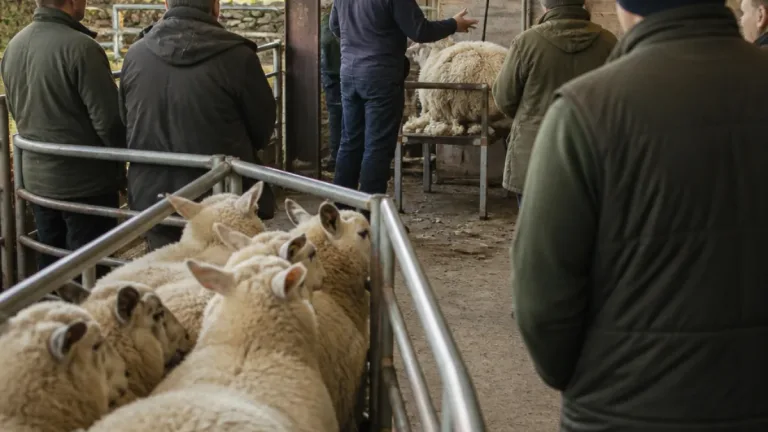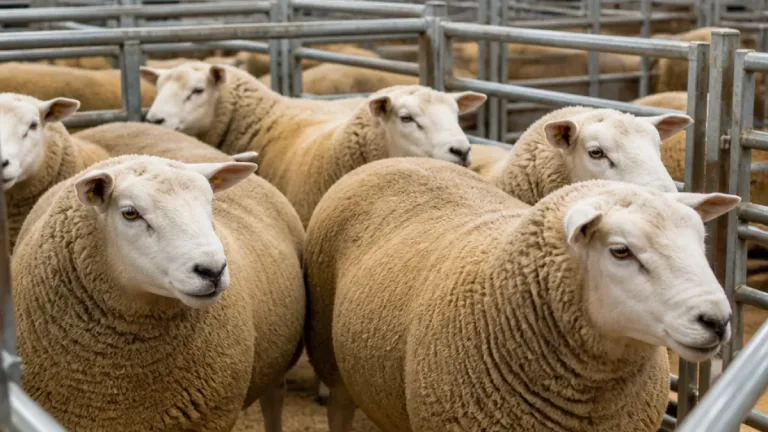
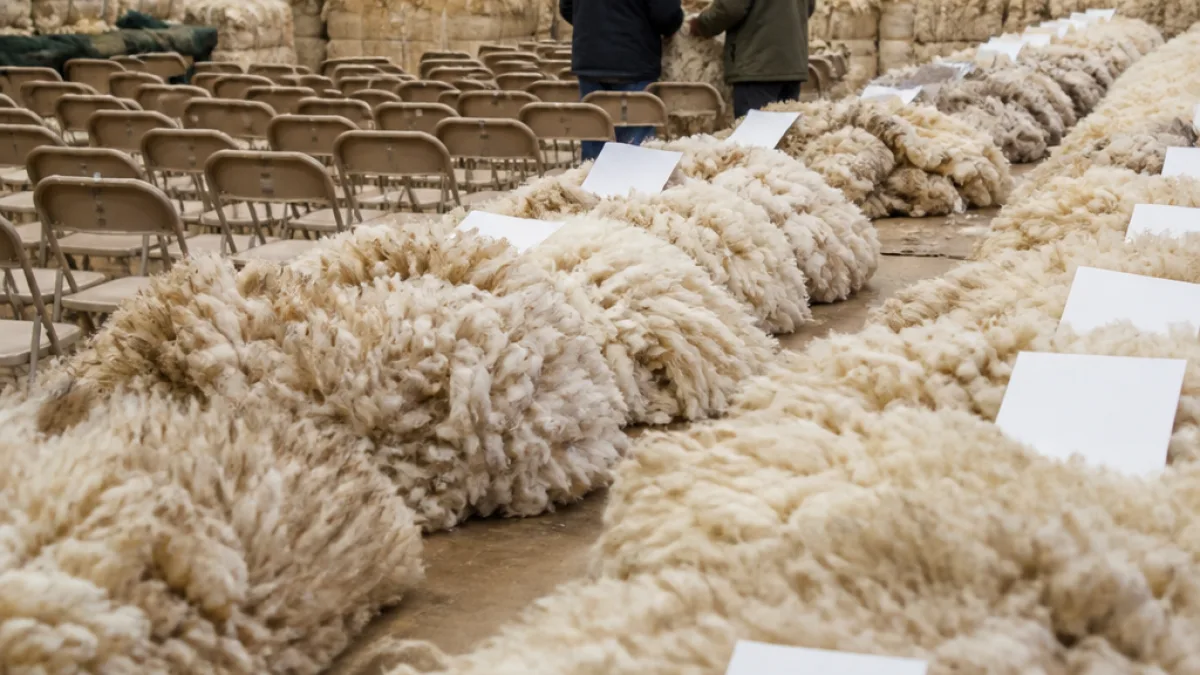
The latest British Wool auction, held on Tuesday 20 October, met more hesitant demand with 876 tonnes (77%) of the sale offering of 1,127 tonnes sold, the organisation reported. That clearance contrasts with the 97.5% sell-through achieved at the previous auction on 6 October.
Price performance and bidding
British Wool recorded an average greasy wool price of £1.64/kg (€1.95/kg), a fall of 1p/kg compared with the 6 October sale. The auction house said exporters were “noticeably more hesitant to bid”, a reluctance that reduced the clearance rate but helped maintain the overall average price.
“Wool is still being traded at these levels, but it has clearly been challenging for merchants, both in the UK and New Zealand, to write new business. Of the core types in the offer, only Cheviot wool had a 100% clearance.” — British Wool
The wool price index for clean wool moved lower by 2.5% to an average of £2.43/kg (€2.89/kg). British Wool highlighted that, despite the more cautious sale, price levels for the season so far remain markedly above last year’s averages.
Season intake and outlook
With just over a quarter of the anticipated supply for the 2026 season now sold, British Wool said the season-to-date average price stands at £1.68/kg. It noted this figure is 33p/kg higher than the average for the 2025 season.
Intake volumes for the 2026-season clip are currently running 2% to 3% ahead of last season. British Wool expects forthcoming sale offerings to be light relative to recent years and indicated upcoming auction volumes are likely to be in the region of 1,000 tonnes.
| measure | figure | note |
|---|---|---|
| sale offering (20 October) | 1,127 tonnes | total in auction catalogue |
| sold | 876 tonnes (77%) | clearance at the 20 October sale |
| average greasy price | £1.64/kg (€1.95/kg) | 1p/kg lower than 6 October |
| clean wool price index | £2.43/kg (€2.89/kg) | down 2.5% |
| season-to-date average | £1.68/kg | 33p/kg above 2025 season average |
For wool producers, the sale underlines a market where buyers are selective but where season-to-date returns remain substantially improved on 2025. British Wool’s comment that only Cheviot among core types achieved a full clearance highlights variation between fibre types in current demand.
Farmers and wool collectives will be watching both intake volumes and merchant appetite at forthcoming auctions, as lower offerings may support prices but cautious merchant behaviour could keep clearance rates variable.