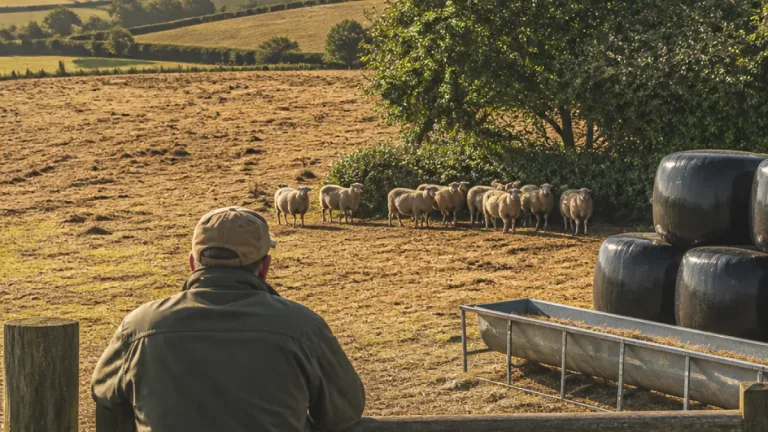

More than 70,000 acres of solar installations in Texas are now being grazed by sheep, according to the American Solar Grazing Association (ASGA), as renewable-energy operators look for alternatives to mechanical vegetation management.
The figure, equivalent to approximately 28,300 hectares, reflects the growth of “solar grazing” in the US state. The practice involves allowing sheep to feed on grass and other vegetation growing around photovoltaic panels, combining livestock production with electricity generation in an approach known as agrivoltaics.
Using sheep beneath solar panels
Large solar developments need regular vegetation control. Grass and other plants continue to grow beneath and between the panels, potentially restricting access to equipment and making maintenance more difficult. Dry vegetation can also create a fire risk if it accumulates, according to the report.
Solar operators have traditionally used mowing equipment or other methods to manage this growth. Sheep offer another option because they can move between panel supports and generally graze without reaching the height of the modules. Their smaller size also means they can be used in situations where heavier cattle could pose a greater risk to infrastructure.
- Sheep are being used to graze vegetation beneath and between solar panels.
- Texas sites covering more than 70,000 acres are reported to be using sheep.
- The suitability and economic and environmental benefits of the system depend on local conditions.
Operation grows around solar land
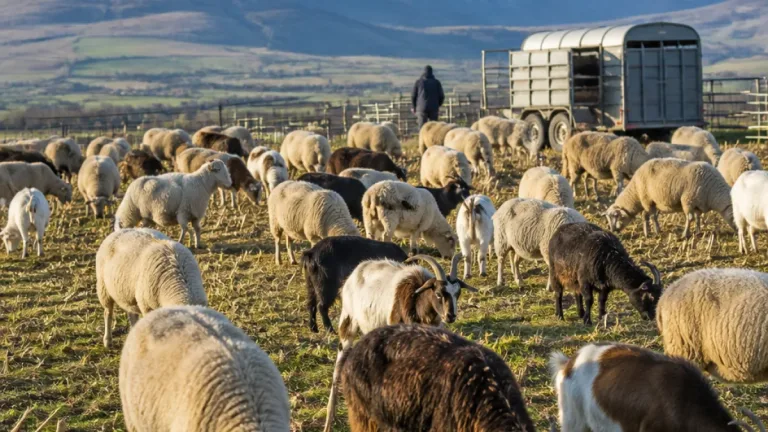
The experience of Howard’s family business, Texas Solar Sheep, illustrates how the model has developed. Reporting published in January 2025 said the operation had grown to manage more than 8,000 animals and employ 26 people.
The arrangement gives ranchers access to land within solar developments while providing operators with a livestock-based way to control vegetation. The ASGA has identified Texas as an important centre for the activity through its Texas Solar Shepherds initiative, which highlights ranchers using photovoltaic sites as grazing land.
Local conditions remain important
The expansion of solar grazing does not make the approach uniform across all sites. The reported economic and environmental advantages depend on local conditions, while the design of the installation affects how safely sheep can move around the panels and supporting structures.
For solar operators, the attraction is linked to reducing reliance on some mechanical vegetation-control work. For sheep businesses, the model can provide access to agricultural land that is also being used for energy generation. The Texas figures show the scale reached by the practice in one state, while the underlying system remains dependent on the relationship between site design, vegetation growth and livestock management.