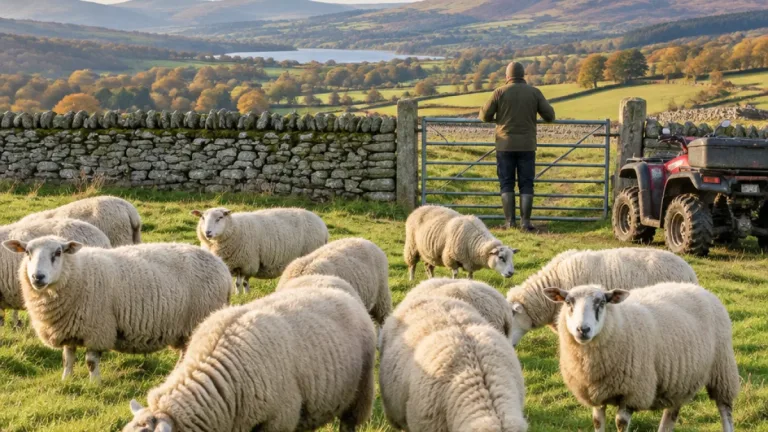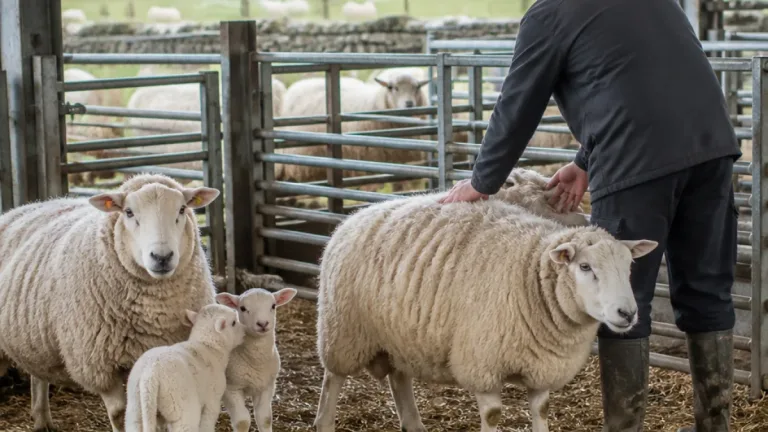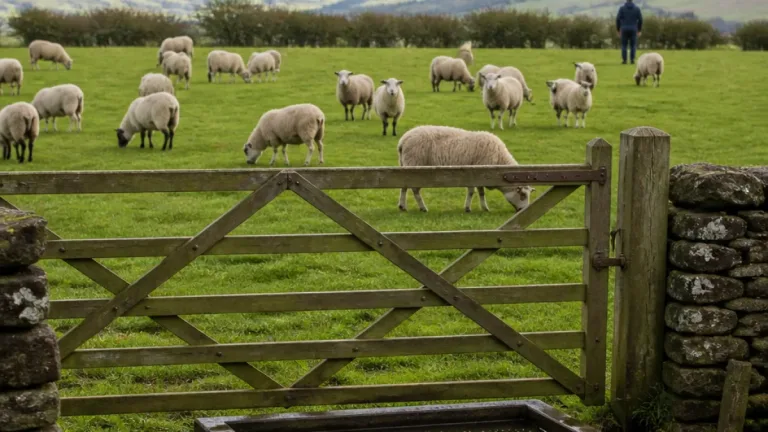
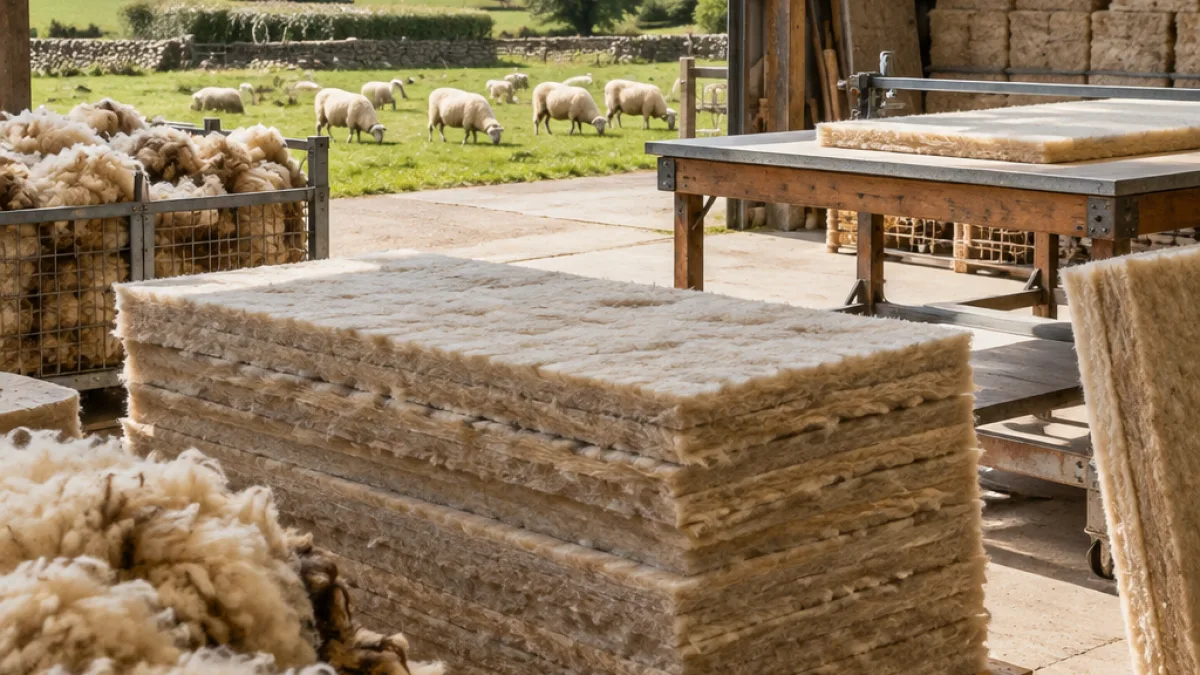
Sheep wool is being developed into rigid insulation panels for buildings in a project intended to create a higher-value use for a fibre that is often treated as a waste product in farming.
Vector Labs and Wool Insulation Wales have developed the panels using a low-energy process that binds wool into a stiff and durable structure. The two companies have formed Wull Technologies Ltd to scale production, according to UK Research and Innovation (UKRI).
UKRI reports that the panels could last up to 100 years when used in walls and beneath floors. Testing has also indicated strong thermal insulation and acoustic absorption performance, with the material intended for residential and commercial applications.
Using wool in building insulation
The project is focused on external wall insulation (EWI), a measure identified as important in improving the performance of the UK's ageing housing stock. UKRI said solid-wall homes are among the least energy-efficient properties and that the country needed to install EWI in 250,000 homes annually by 2025, compared with 11,000 homes upgraded in 2019.
Traditional insulation materials including mineral wool and expanded polystyrene have been described by UKRI as carrying high embodied carbon costs. The Welsh project is therefore examining whether sheep wool can provide an alternative based on a renewable natural fibre, while retaining the practical characteristics needed for building work.
“natural thermal, acoustic and flame retardant properties”
Those properties were highlighted by Neil Witten, Innovation Lead for Advanced Materials at Innovate UK. He also described wool as normally being a waste product, underlining the potential for the project to change how the fibre is handled beyond its established uses.
Potential role in a circular economy
UKRI said the panels fit with circular economy principles. Sheep wool is biodegradable and contains nitrogen, which the organisation said makes it suitable for eventual composting. The insulation development is intended to retain those natural characteristics while creating a manufactured product for walls and floors.
For the sheep sector, the work concerns the route taken by wool after shearing rather than a change to flock management. Its commercial significance will depend on the ability of Wull Technologies Ltd to scale production and supply panels for construction applications. The companies' joint venture has been established for that purpose, although no production volumes or prices were given.
- Vector Labs and Wool Insulation Wales have formed Wull Technologies Ltd.
- The panels use a low-energy binding process to create a rigid structure.
- UKRI reports potential durability of up to 100 years in walls and under floors.
UKRI said the panels combine thermal and acoustic insulation performance with the material properties of sheep wool. The project places the fibre within a wider effort to reduce the carbon impact of construction materials and improve the energy efficiency of existing homes.