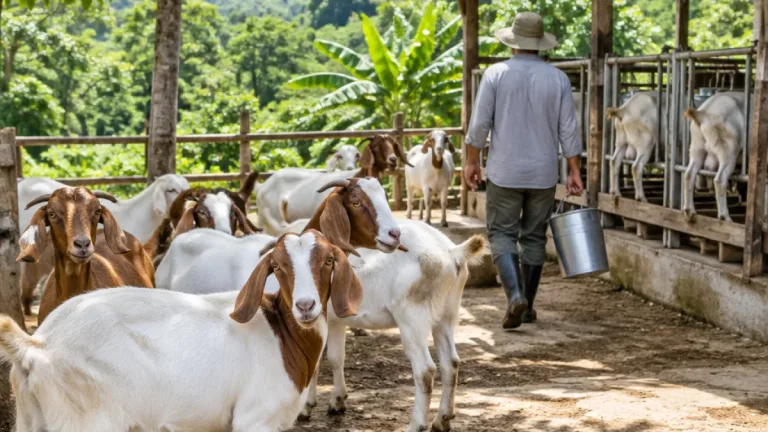
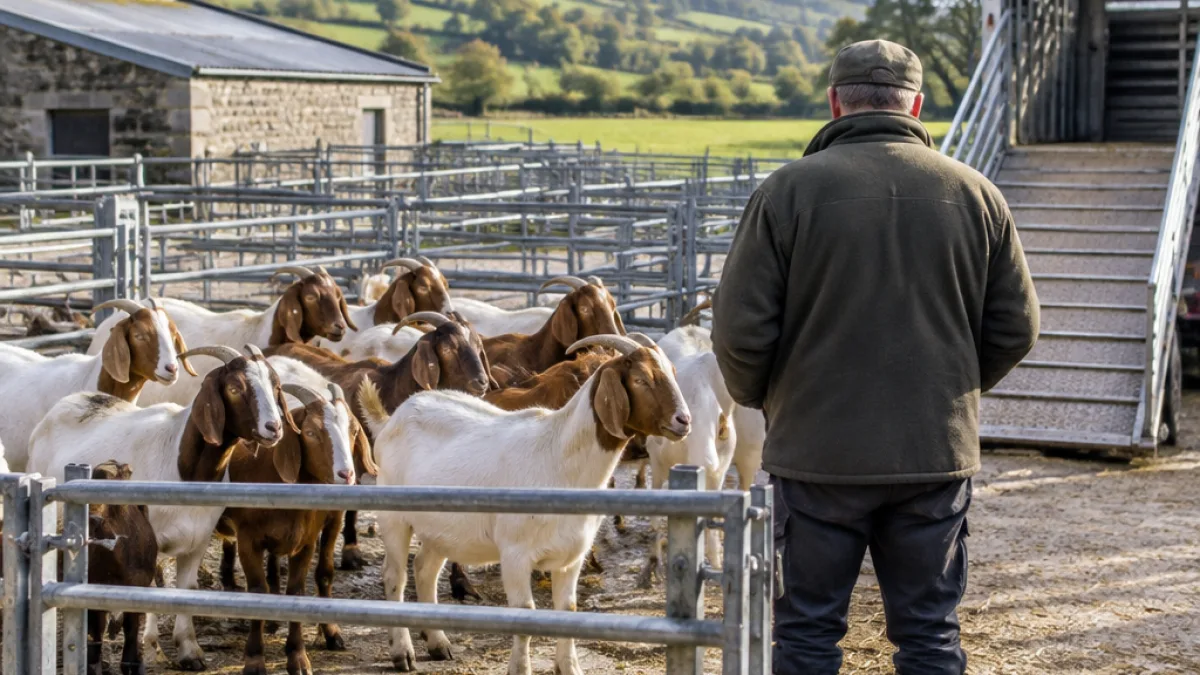
Australian goat producers are warning that the industry is losing businesses despite strong demand for goat meat, with low prices, limited quality differentiation and supply-chain constraints continuing to restrict returns. Dean Smith, principal of Strzboer Goat stud at Cohuna and chair of the Victorian branch of the Boer Goat Breeders' Association of Australia (BGBAA), said the sector had failed to develop systems capable of rewarding higher-quality animals.
Victoria is Australia’s largest producer of goat carcases. The state processed 1.7 million head in 2025, while national goat slaughter rose by 18% year on year to a production total of 63,672 tonnes carcase weight. However, only about 10,000 tonnes remained in Australia, underlining the sector’s reliance on export markets.
Producers seek clearer value signals
Mr Smith told Stock & Land that goats were being treated as a single category at processing, regardless of their type, sex or quality. He said the absence of an official grading framework made it difficult to establish a consistent value for different animals or to build a stronger domestic market for goat meat.
“Each animal is identified as a goat and then there is no differentiation between the quality of the animals or even the type of goat or whether it is male or female,” Dean Smith said.
He said the industry lacked the technical basis needed to support value-added marketing. The problem was not necessarily an absence of quality in the animals, but a lack of consistency that could be measured and recognised through the supply chain.
The figures reported for 2025 show the scale of the production opportunity, but producers say expansion in slaughter numbers has not been matched by the infrastructure and standards needed to retain more value in Australia. The reported pressure points include:
- the lack of an official grading system for goat carcases;
- limited differentiation between animal type, sex and quality;
- supply-chain bottlenecks; and
- low returns that are contributing to producers leaving the industry.
| Measure | Reported figure | Period or comparison |
|---|---|---|
| Victorian goat carcases processed | 1.7 million head | 2025 |
| Australian goat-meat production | 63,672 tonnes carcase weight | 2025 |
| Change in slaughter | 18% | Year on year in 2025 |
| Goat meat retained domestically | About 10,000 tonnes | 2025 production |
Industry concerns extend beyond the export market
Sue Ryan, a recently retired producer from the Glendalong Group at Tallarook and a former BGBAA director, said the industry had made little progress in meeting the opportunities created by rising demand. The business previously ran a herd of 2,500 purebred Boer goats. Her assessment was that the sector had returned to conditions seen around 25 years ago, even though demand remained available.
“The goat industry I’d say now is back where it was 25 years ago, even though the demand is there,” Sue Ryan said.
The comments come as Australian goat production continues to be shaped by export demand, while the domestic market accounts for only a relatively small share of total output. Producers’ concerns therefore centre not only on the number of goats being processed, but also on whether the industry can establish a more transparent method of identifying and paying for quality.
For Victorian producers, the debate is consequently focused on how the sector can turn growing throughput into more reliable commercial returns. Mr Smith said the quality required for a stronger goat-meat market existed, but that variation between animals and the absence of recognised grading standards were holding back value across the chain.