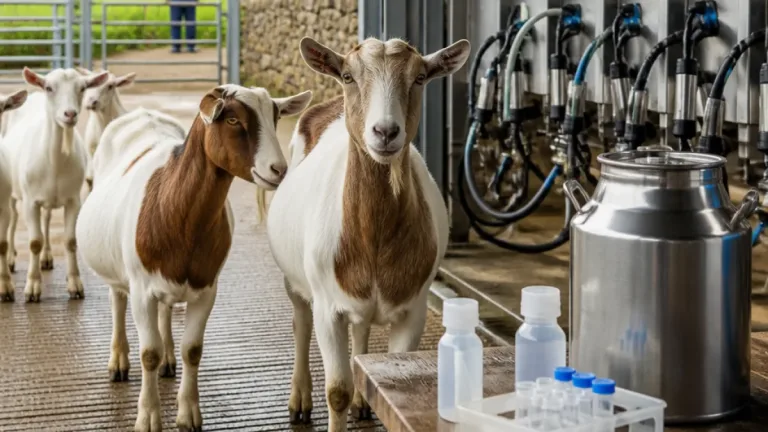
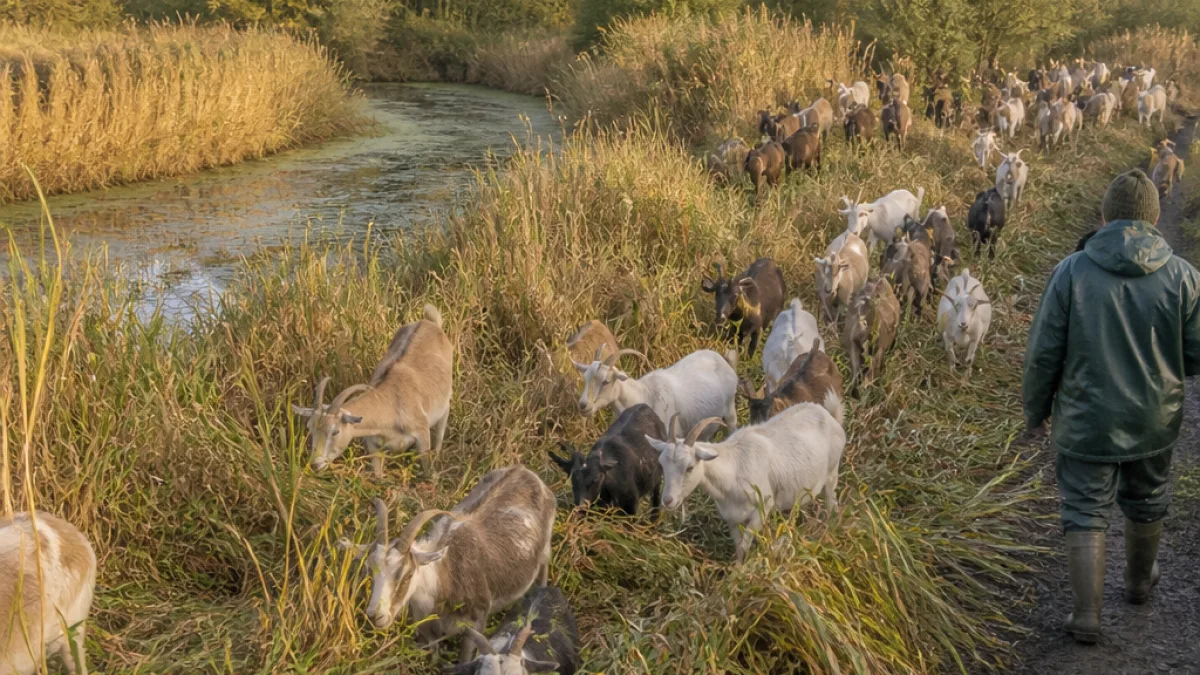
Goats have been put to work in Rama to tackle a heavy infestation of invasive phragmites and other non-native plants, with the herd reported to have cleared roughly three acres of dense growth in about three weeks.
Project and results
The initiative, run by Goats at Work of Coldwater, brought a mob of 60 goats to graze areas around Hubs Rock Trail and surrounding creek systems where phragmites had become particularly dense and were out-competing native species. Goats on the site were also eating garlic mustard, common buckthorn, purple loosestrife and dog-strangling vine, according to the report.
“The community really focused on our creek system. There’s a lot of encroachment from the phragmites, like coming out from the creeks and going into the creeks, kind of destroying habitat and just making it very unsightly,” said Shannon Snache, lands and membership manager, facilities and operations with the Chippewas of Rama First Nation
She emphasised the concern about the plants’ proximity to watercourses and the impact on native medicinal plants such as red osier dogwood. Dan Spence, shepherd and founder of Goats at Work, described the project as notable for the density of phragmites and sumac at the site and said the herd were effectively removing the vegetation with little prompting.
“To be able to come in and have the goats be as effective as they have been, be the solution t
Grazing dynamics and pace
Goats at Work reported the herd were benefitting from what the shepherd described as seasonal palatability: the animals were willing to consume phragmites, poison ivy and sumac during the project period. At approximately three weeks into the contract, the goats had eaten through about three acres, which the company described as an average rate of progress for the herd size and vegetation encountered.
| item | figure |
|---|---|
| herd size | 60 goats |
| area grazed (approx.) | three acres |
| time elapsed | about three weeks |
| operator | Goats at Work (Coldwater) |
Ecological context
The Penticton Herald report notes phragmites can grow up to 15 feet tall and are capable of displacing native vegetation by monopolising nutrients and water. In Rama the invasive growth was reported to be affecting habitat quality and the availability of native plants used for medicinal and cultural purposes, prompting community engagement in selecting a response.
Project organisers highlighted the animals’ appetite for a broad range of invasive species, which can make targeted grazing a practical control measure in sensitive wetland or riparian zones where mechanical removal and herbicide use have drawbacks.
Practical takeaways for land managers
- Targeted goat grazing can be effective on dense stands of phragmites and allied invasive plants where mechanical or chemical methods are unsuitable.
- Project pace depends on herd size, plant maturity and site conditions; in this instance a 60-head herd cleared about three acres in three weeks.
- Community concerns around watercourses and native plants were a central driver for choosing grazing as the control method in Rama.
The initiative in Rama provides a recent example of applied conservation grazing using goats to reduce invasive plant cover in riparian and wetland-edge habitats.