Viral DNA linked to sheeppox has been recovered from Bronze Age sheep teeth and medieval parchment, allowing researchers to investigate the disease across more than 3,500 years of history. The findings come from a University College Dublin-led study published in the peer-reviewed journal Science Advances.
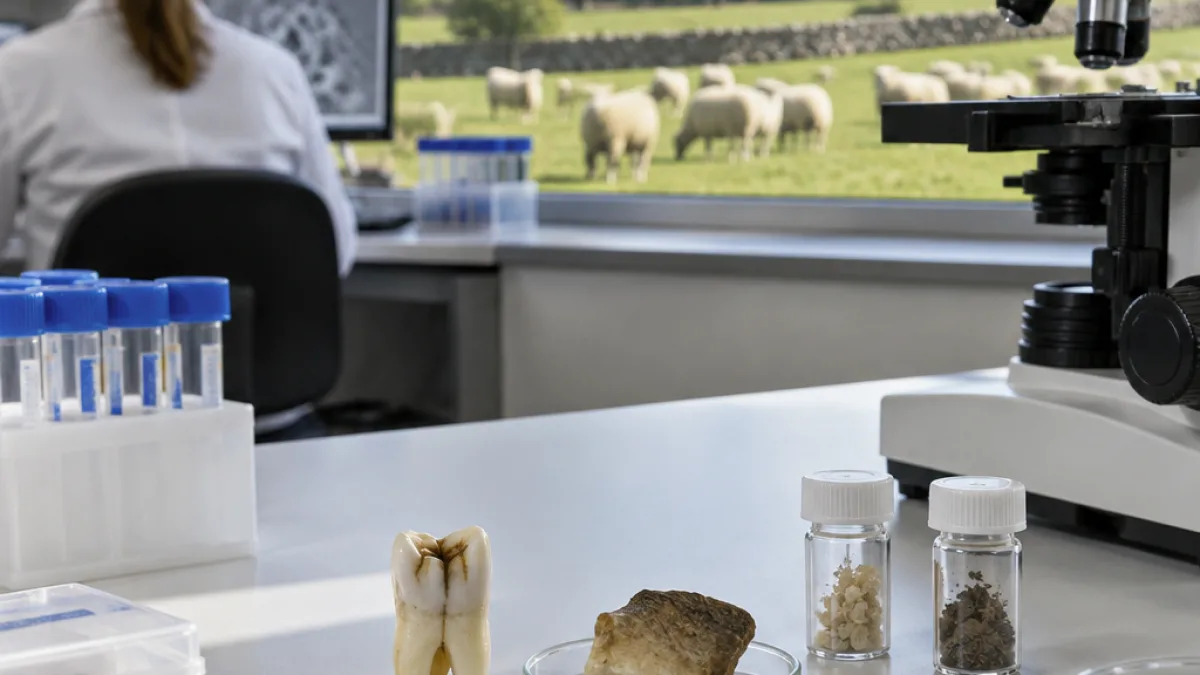
The oldest genetic material examined by the researchers dates to approximately 3,700 years ago. It was identified in sheep teeth from archaeological sites on the Eurasian steppe, while additional evidence came from parchment manuscripts produced during the medieval period.
Manuscripts provide an unexpected disease record
The study examined parchment from Britain and continental Europe. The material included the Corpus Glossary held at Corpus Christi College in Cambridge and the York Gospels, an early Anglo-Saxon illuminated manuscript.
Researchers said viral traces can remain in an animal’s hide after death. Their explanation is that hides may have acquired sheeppox material during the production of parchment, creating a previously overlooked source of evidence for the history of livestock disease.
| Material | Period or location described | Finding |
|---|---|---|
| Sheep teeth | Bronze Age sites on the Eurasian steppe | Sheeppox genetic material, with the oldest evidence dating to about 3,700 years ago |
| York Gospels | Early Anglo-Saxon period | Viral DNA preserved in parchment |
| Manuscripts | Medieval Britain and continental Europe | Additional sheeppox traces recovered from animal hide parchment |
Questions about the virus remain
The research extends the use of ancient pathogen DNA beyond archaeological remains and into historical documents. It suggests that libraries and archival collections may contain further evidence about livestock diseases that affected animals in the past.
However, the recovered material does not resolve every question about sheeppox. The researchers identified areas requiring further investigation, including whether the virus occasionally infected livestock species other than sheep and which genetic changes enabled it to infect sheep.
The study therefore provides historical evidence rather than a current outbreak assessment. Its importance lies in adding older genetic material to the record of sheeppox, giving researchers another way to examine how the virus changed over time and how livestock disease may have been preserved indirectly through animal products and written culture.
Key implications for disease research
- Ancient sheep remains can preserve viral genetic material dating back thousands of years.
- Parchment made from animal hides may provide an additional archive for reconstructing livestock disease history.
- Further work is needed to clarify the virus’s host range and the genetic changes associated with infection in sheep.