A new report has warned that the UK faces a major land-use challenge as it tries to meet climate, nature and food-production targets. Without changes to the way land is managed and the food people eat, the country could require an additional 4.5 million hectares by 2050, according to findings reported by BBC Farming Today.
Competing demands for land
The paper, published in the Land Use Journal, was written by Professor Sir Charles Godfray, Director of the Oxford Martin School. Its warning comes as policymakers and the farming industry consider how land should be used to support food production while also delivering environmental objectives.
The report places food choices alongside land management in the debate. It suggests that meeting the UK’s environmental ambitions will not depend on one change alone, but on how competing demands are reconciled across the countryside. Those demands include producing food, supporting biodiversity and reducing the environmental impact associated with farming and consumption.
Pulses offer an opportunity, but with risks
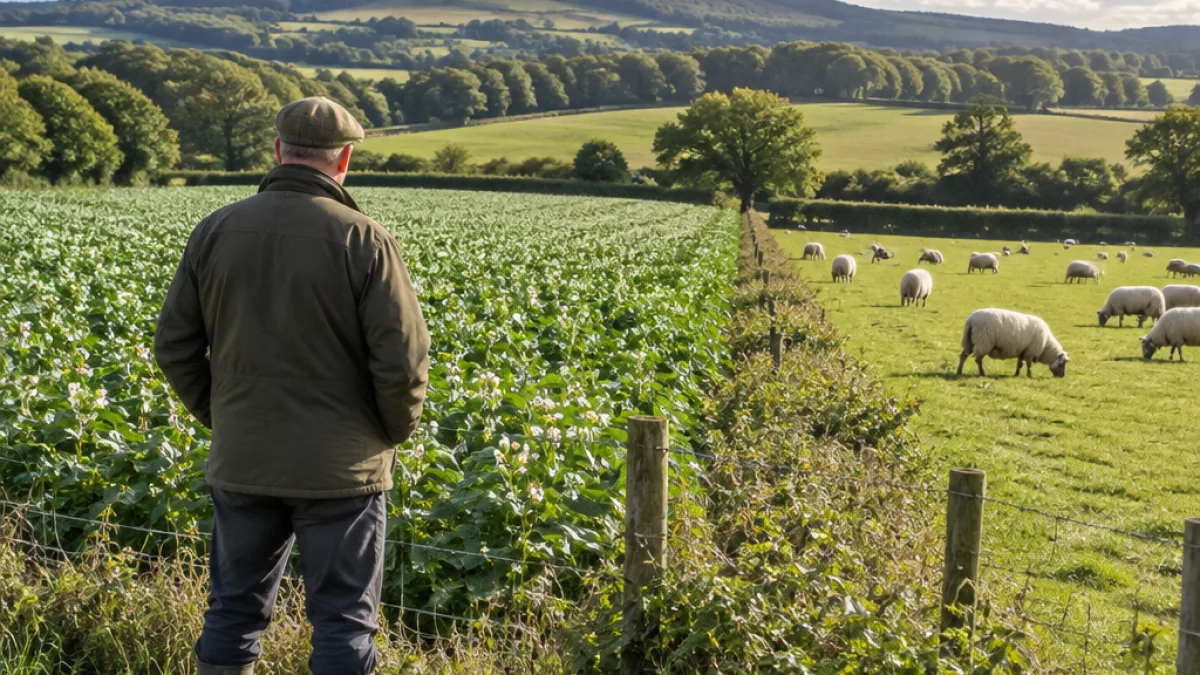
BBC Farming Today also examined the prospects for growing more pulses in the UK. Peas and beans are traditionally used as break crops, helping to restore nitrogen to the soil after cereal production. They are also an established source of animal feed.
Growing pulses for human consumption could offer better returns than producing them for feed, the programme reported. However, the move would not be without risk for farmers. Decisions would have to take account of the reliability of yields, market outlets and the practical demands of changing a farm’s cropping system.
- Land pressure: the report identifies a potential requirement for an extra 4.5 million hectares by 2050.
- Environmental targets: climate and nature objectives are being considered alongside domestic food production.
- Farm decisions: pulses may have a role in both soil management and food supply, but returns and production risks differ between markets.
Implications for livestock supply chains
The discussion is relevant to livestock farmers because peas and beans are currently used for animal feed. A shift towards food-grade pulses would alter how some crops are valued and where they are directed, although the report and programme extract do not set out a forecast for feed availability or prices.
For livestock businesses, the wider issue is how decisions elsewhere in the food system affect the supply of feed and the use of agricultural land. Crop choices can influence rotations and soil management, while demand from human food and animal feed can create different commercial incentives. The balance will also depend on whether suitable markets and processing routes are available.
The report’s warning therefore frames land use as a joined-up issue rather than a choice between farming and environmental protection. Food production, nature recovery and climate commitments will all compete for space unless policies, diets and farm markets develop in a coordinated way.