Ahmadu Bello University (ABU), Zaria, and the University of Copenhagen have begun a multidisciplinary research project examining how changes in pastoral livestock production affect household welfare, animal productivity and relations between farming communities in Nigeria.
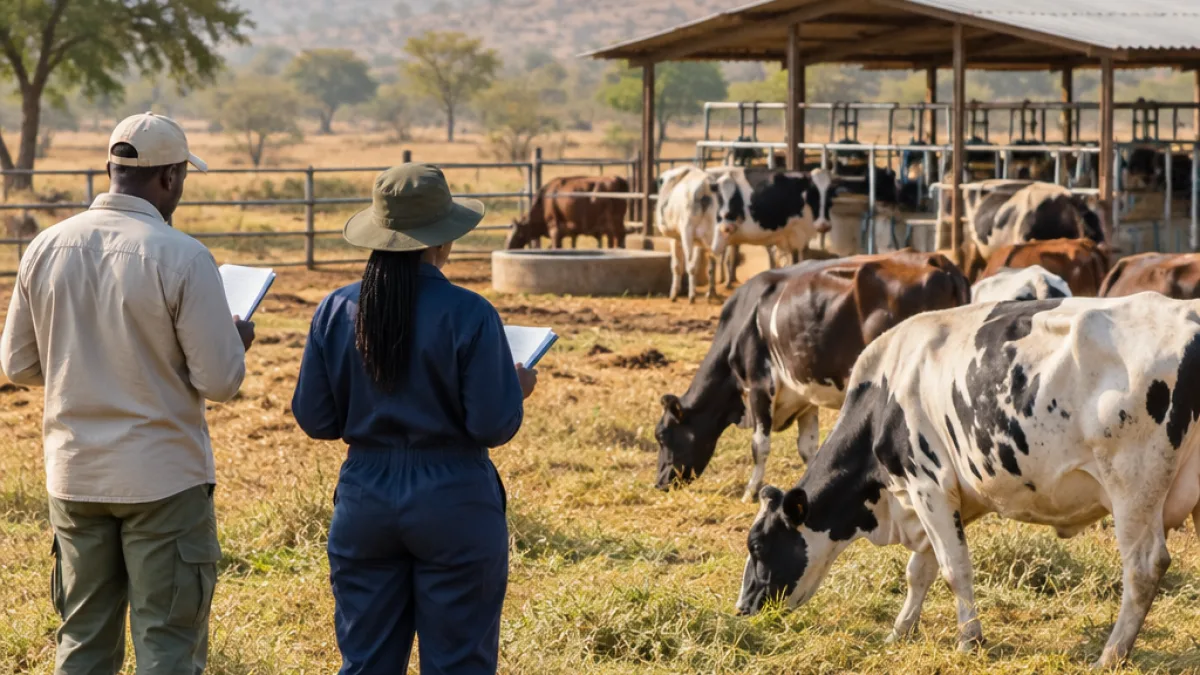
The initiative, known as the SCREEN Project, is centred on the Damau Household Milk Farm in Kubau Local Government Area of Kaduna State. Researchers will investigate the effects of moving from nomadic pastoralism towards more settled livestock production, a process described as sedentarisation.
Study will compare households involved in interventions
The work is intended to generate evidence for policies and development programmes addressing the economic, environmental and social pressures facing pastoral communities. Its stated objectives include improving pastoral livelihoods, increasing dairy production, strengthening resilience to climate pressures and addressing conflicts linked to access to resources.
Associate Professor Sanni Abdullahi, the Nigerian Coordinator of the project and a member of ABU’s Department of Agricultural Economics, said the study would assess the relationship between settled production systems and several measures of household and livestock performance. These include milk productivity, household income, the ability to adapt to climate pressures and relations between farmers and herders.
A survey has already covered 736 households in Damau. Of these, 256 households were identified as beneficiaries of existing interventions, while 488 households were classified as non-beneficiaries. The comparison is intended to provide data on differences in welfare, livestock productivity, access to essential services and the effectiveness of improved dairy-farming practices.
| Household group | Number surveyed |
|---|---|
| Beneficiaries of existing interventions | 256 |
| Non-beneficiaries | 488 |
| Total surveyed | 736 |
Research links production, climate and social outcomes
ABU said the project brings together two connected studies involving academic departments at the Nigerian and Danish universities. That structure reflects the range of issues being examined rather than treating livestock output as an isolated technical measure.
The areas identified for assessment include:
- the effect of sedentarisation on milk productivity and household income;
- the contribution of settled livestock systems to climate adaptation;
- access to services and the performance of improved dairy-farming practices; and
- the relationship between livestock production arrangements and farmer-herder conflict.
The project also includes research training, with seven doctoral researchers and seven master’s degree researchers due to be supported across the participating institutions. The extracted announcement does not report findings from the survey or provide a timetable for the completion of the studies.
For livestock policy, the significance of the work will depend on the evidence it produces about whether settled production delivers measurable improvements for households and animals, and how those outcomes compare with communities that have not received the interventions being assessed. At this stage, the project is a research programme rather than a reported evaluation result, with its conclusions still to be established.