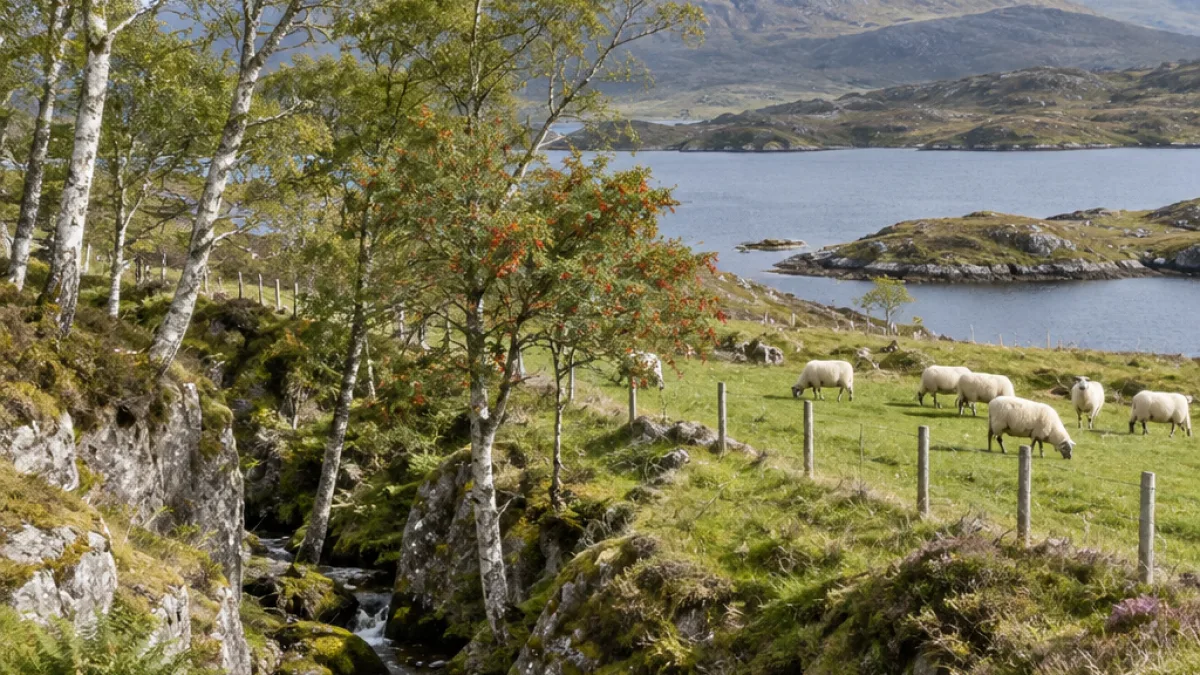
Thirty-three fragments of ancient native woodland have been identified across Scotland’s Western Isles in what conservationists describe as the region’s most comprehensive survey for decades.
Woodland covers less than 1% of the Western Isles, where the existing tree cover is predominantly coniferous. The newly recorded remnants are part of a rare rainforest habitat and include sites on crags, in gullies and on small islets in freshwater lochs.
Those locations have provided some protection from grazing sheep and deer. Several of the sites are difficult to reach, with access possible only by rope or kayak, according to the survey findings reported in the latest edition of Scottish Forestry, the journal of the Royal Scottish Forestry Society.
Fifteen sites identified for restoration
Woodland Trust Scotland has selected 15 of the 33 locations as priorities for restoration and expansion. The organisation said the work is intended to restore woodland that was once more widespread across the islands.
“reawaken the ancient woods of the isles”
The survey was carried out for Woodland Trust Scotland and Point and Sandwick Trust. It recorded a range of native trees, including downy birch, rowan, hazel, aspen, holly, ash and several types of willow. Plants found beneath the remaining tree canopy included heather, bracken, ferns, bramble, foxgloves and bluebells.
Grazing among pressures recorded
The report identified grazing, burning and invasive non-native species such as rhododendron as pressures on the woodland fragments. It recommended using fencing to prevent grazing in vulnerable areas, alongside reducing deer numbers to help existing woodland survive and expand.
- 33 locations containing historic fragments of native woodland were identified.
- 15 sites were selected by Woodland Trust Scotland as restoration priorities.
- Recommended measures include fencing, action on deer numbers and new woodland creation.
The report said woodland creation would be needed alongside natural regeneration. It also warned that natural regeneration alone is likely to be slow, making protection of the surviving pockets an important part of the proposed restoration approach.
The Western Isles are not formally included within Scotland’s temperate rainforest zone. However, experts cited in the report said the remaining woodland could develop into a similar rainforest habitat if restored, supporting native trees, lichen and moss. Woodland Trust Scotland outreach manager Iona Hyde said the organisation would contact the owners of the 15 priority sites.