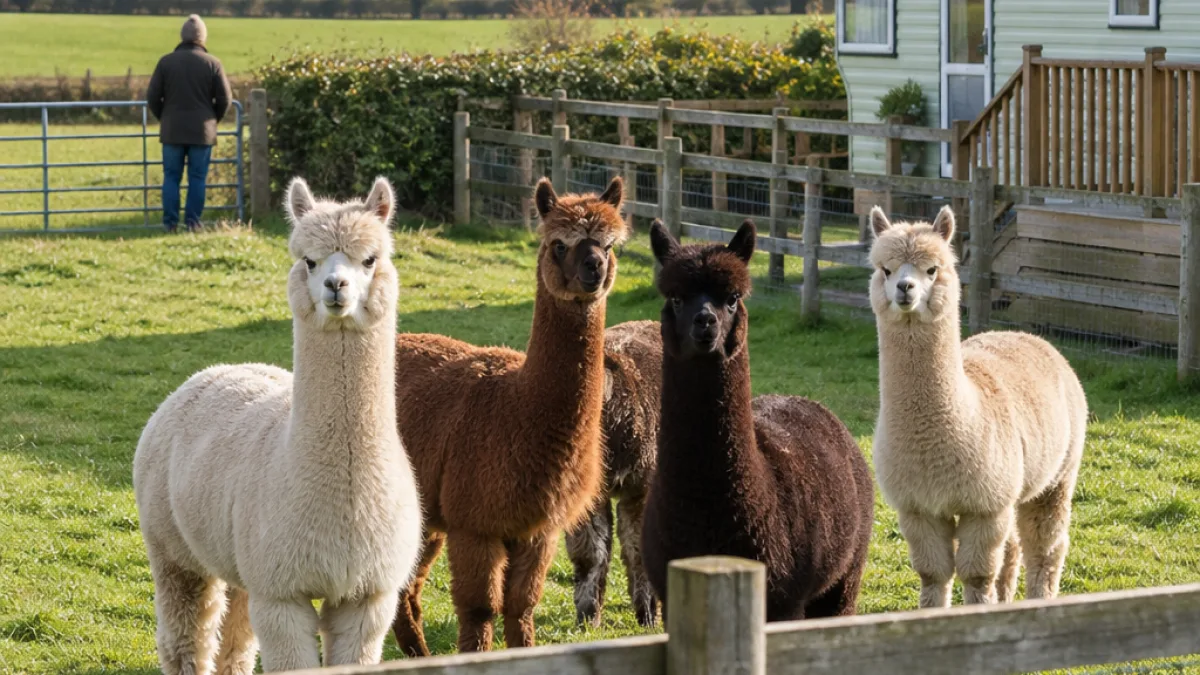
A planning inspector has dismissed an appeal by Paul Whiting against the refusal of permission to retain a caravan at Chalk Farm Alpacas and Eggs, a small livestock holding at Clopton in Suffolk.
East Suffolk Council had refused the application, which sought permission for Mr Whiting to continue living in the caravan for a further three years. The appeal site, north of Pipers Vale in Shop Road, covers about 4.4 acres and forms part of the smallholding operated by Mr Whiting.
Inspector found no essential need
The caravan was brought onto the land in March 2024 and had been used as Mr Whiting’s residence. The planning inspector considered whether the holding required a temporary dwelling for a rural worker, as well as the effect of the proposal on the landscape and the character and appearance of the surrounding countryside.
Mr Whiting told the hearing that he was working towards establishing a sustainable smallholding capable of supporting the enterprise permanently. He said that, by the end of the proposed temporary period, the business should be sufficiently established to allow him to consider other accommodation arrangements. Those options included living off-site or obtaining support from an additional agricultural worker.
“The caravan is necessary to support the applicant’s ability to care for livestock and maintain the holding, particularly as the operation grow to include alpacas.”
That argument was made in a planning statement by Mr Whiting’s agent, Tim Ludbrook. The enterprise had initially concentrated on free-range egg production and was expanding to include alpaca farming for wool.
However, the inspector was not persuaded that the evidence demonstrated an essential requirement for Mr Whiting to live at the appeal site. The decision also took account of the caravan’s effect on the countryside, meaning that the proposed retention was not accepted on either the operational or landscape grounds considered in the appeal.
Business plans set out in appeal
The case illustrates the elements considered in an application for temporary accommodation linked to a rural enterprise. The plans put forward at the hearing included:
- developing the smallholding into an operation capable of supporting itself on a permanent basis;
- expanding from free-range egg production into alpaca farming for wool; and
- reviewing accommodation arrangements after the proposed three-year period, including off-site housing or help from another agricultural worker.
Despite those plans, the planning inspector concluded that the threshold for an essential need for a temporary rural worker’s dwelling had not been met. The appeal against East Suffolk Council’s refusal was therefore dismissed, leaving the application to retain the caravan unsuccessful.