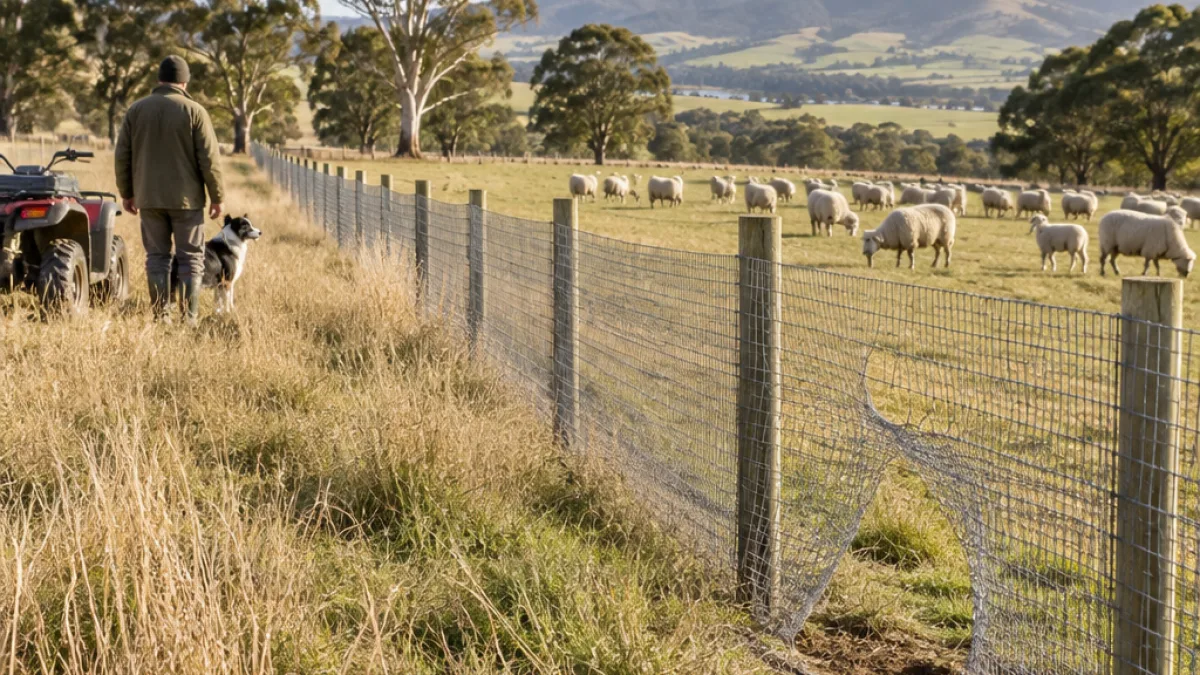
Autonomous drones and artificial intelligence are being tested in Victoria to help livestock producers monitor dingoes and identify damage to wildlife exclusion fencing.
The work forms part of the Dingo Drone Pilot Project, announced on 29 October by Agriculture Victoria. Victorian company Drone-Hand is exploring whether its technology can provide an additional tool for reducing livestock predation and supporting animal welfare.
Two monitoring applications
The trial is examining separate uses of drone imagery and machine-learning systems in two parts of the state. In north-west Victoria, the project will assess whether drones can monitor exclusion fencing more efficiently, including detecting digging and breaches that could allow predators to enter farmland.
In north-east Victoria, the work will focus on developing, training and validating machine-learning models that can detect and identify dingoes moving onto agricultural land. The project is therefore testing both the collection of aerial information and the ability of artificial intelligence to interpret it.
- North-west Victoria: monitoring wildlife exclusion fencing for digging and breach activity.
- North-east Victoria: building and validating models to detect and identify dingoes.
- Livestock protection: assessing whether the technology can complement existing measures and help reduce losses.
“We recognise the challenges facing Victorian livestock producers and want to test this technology to see if drones can complement and strengthen existing livestock protection measures,” said Stephen Baud, programme manager at Agriculture Victoria.
Testing technology alongside existing measures
Agriculture Victoria said the pilot would investigate the technology’s potential to provide producers with extra protection tools, rather than presenting drones as a replacement for current livestock protection arrangements. The programme manager said the assessment would also consider whether the systems could improve animal welfare outcomes by helping producers respond to predation risks.
Drone-Hand specialises in autonomous drone and artificial intelligence systems for monitoring livestock, herd health and on-farm infrastructure. Its founder and chief executive officer, Edward Barraclough, said the company was working with Agriculture Victoria to test whether its systems could be incorporated into livestock operations affected by ongoing predation.
“We’re excited to work with Agriculture Victoria to trial our drone systems to further support livestock farmers – this technology has the potential to provide a tangible new management tool that can be seamlessly incorporated into most livestock operations impacted by ongoing predation challenges,” said Edward Barraclough.
Support for Victoria’s agri-tech sector
The trial is linked to Agriculture Victoria’s wider investment in technology development. The department has committed $15 million through the AgTech Regional Innovation Network (AgRIN) initiative to grow Victoria’s agri-tech sector and support emerging businesses working towards commercialising new systems.
Drone-Hand was a participant in the AgRIN programme, which Agriculture Victoria said helped the company accelerate its growth and bring its autonomous drone and artificial intelligence technology closer to market. The Dingo Drone Pilot Project will now provide a practical test of how those systems perform in livestock protection work, including surveillance of fencing and predator identification.