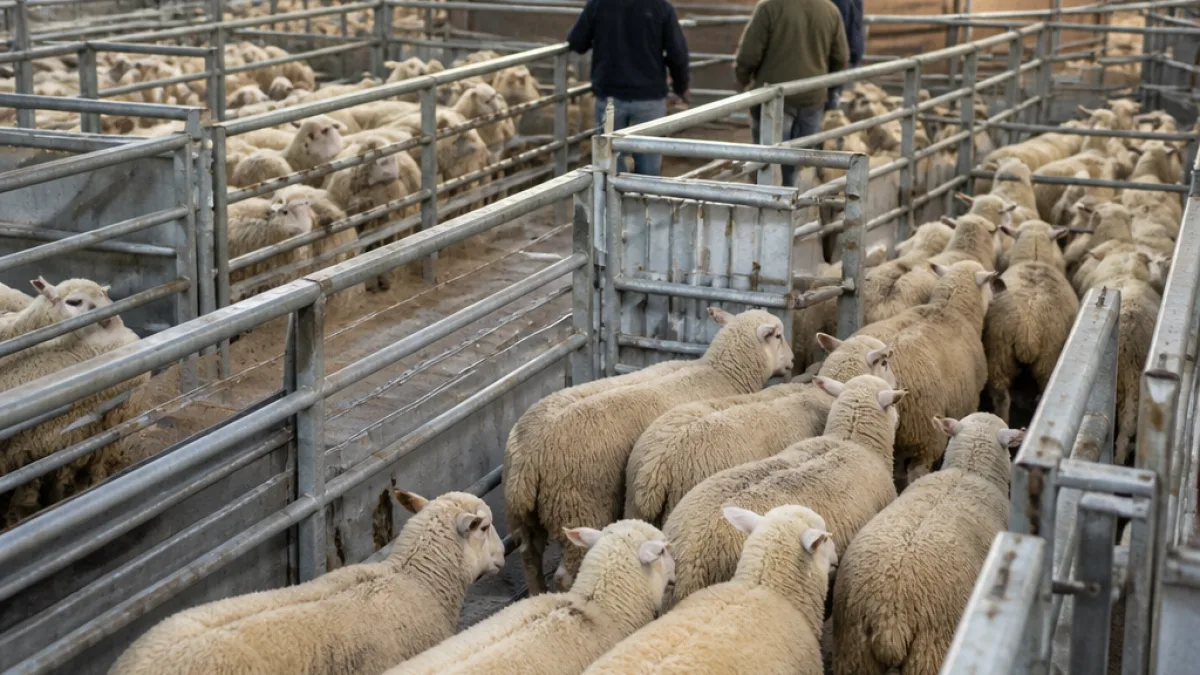
Sheep and lamb supplies are increasing across much of southern Australia, but the expected downward effect on prices has not materialised. The October Sheep and Lamb Yarding Index shows that livestock availability is becoming more widespread across the region, while national lamb prices have moved higher over the past four weeks.
The movement is notable because the spring lift in saleyard activity has historically been associated with greater price pressure. Instead, the additional lambs have been absorbed by the market, according to the index report. The figures point to a broader seasonal supply response after a prolonged period of very limited sheep availability in several producing areas.
Sheep yardings rise in five states
Sheep yarding indices increased in five of Australia’s six states during October. Western Australia recorded the largest improvement, with its index moving from 34 per cent in September to 55 per cent in October. Victoria also recorded a marked rise, from 24 per cent to 36 per cent, while South Australia moved from 31 per cent to 35 per cent.
Tasmania’s sheep index increased from 12 per cent to 30 per cent, and Queensland edged upwards from 58 per cent to 63 per cent. New South Wales was the only state to record a fall, with its index easing from 46 per cent to 42 per cent.
| State | Sheep index in September | Sheep index in October | Lamb index in September | Lamb index in October |
|---|---|---|---|---|
| Western Australia | 34 per cent | 55 per cent | 19 per cent | 29 per cent |
| Victoria | 24 per cent | 36 per cent | 8 per cent | 24 per cent |
| South Australia | 31 per cent | 35 per cent | 33 per cent | 57 per cent |
| Tasmania | 12 per cent | 30 per cent | 7 per cent | 40 per cent |
| Queensland | 58 per cent | 63 per cent | 41 per cent | 42 per cent |
| New South Wales | 46 per cent | 42 per cent | 79 per cent | 60 per cent |
Lamb supply becomes more evenly distributed
The lamb figures show the geographical change particularly clearly. South Australia’s index climbed from 33 per cent in September to 57 per cent in October. Victoria rose from 8 per cent to 24 per cent, while Western Australia increased from 19 per cent to 29 per cent. Tasmania recorded a sharp rise from 7 per cent to 40 per cent.
Queensland changed little, moving from 41 per cent to 42 per cent. New South Wales remained at a relatively high level despite falling from 79 per cent to 60 per cent. The reduction suggests that the earlier concentration of spring lamb sales through New South Wales is beginning to ease as other producing states bring more stock forward.
Relevance beyond Australia
For sheep businesses in the UK, the Australian figures provide an international indication of how a larger seasonal supply can be handled without an automatic weakening in lamb values. The report does not give a direct comparison with UK prices, and Australian yarding indices cannot be applied to British markets. However, the combination of increased offerings and firmer national lamb prices highlights the importance of demand and market capacity alongside the volume of stock presented for sale.
- Sheep yarding indices rose in five of the six Australian states during October.
- Western Australia recorded the strongest sheep increase, from 34 per cent to 55 per cent.
- Lamb yardings rose particularly sharply in South Australia and Tasmania, while national lamb prices increased over the previous four weeks.