Body condition score (BCS) is closely associated with several important measures of ewe performance, including colostrum quality, sustained milk production and lamb weight at eight weeks, according to sheep specialist Dr Nerys Wright.
Speaking at Flock Focus 2026, hosted by AgriSearch in County Tyrone, Wright said condition scoring provided a way of assessing the nutritional reserves available to a ewe. The system generally runs from one, representing an emaciated animal, to five, representing an obese animal.
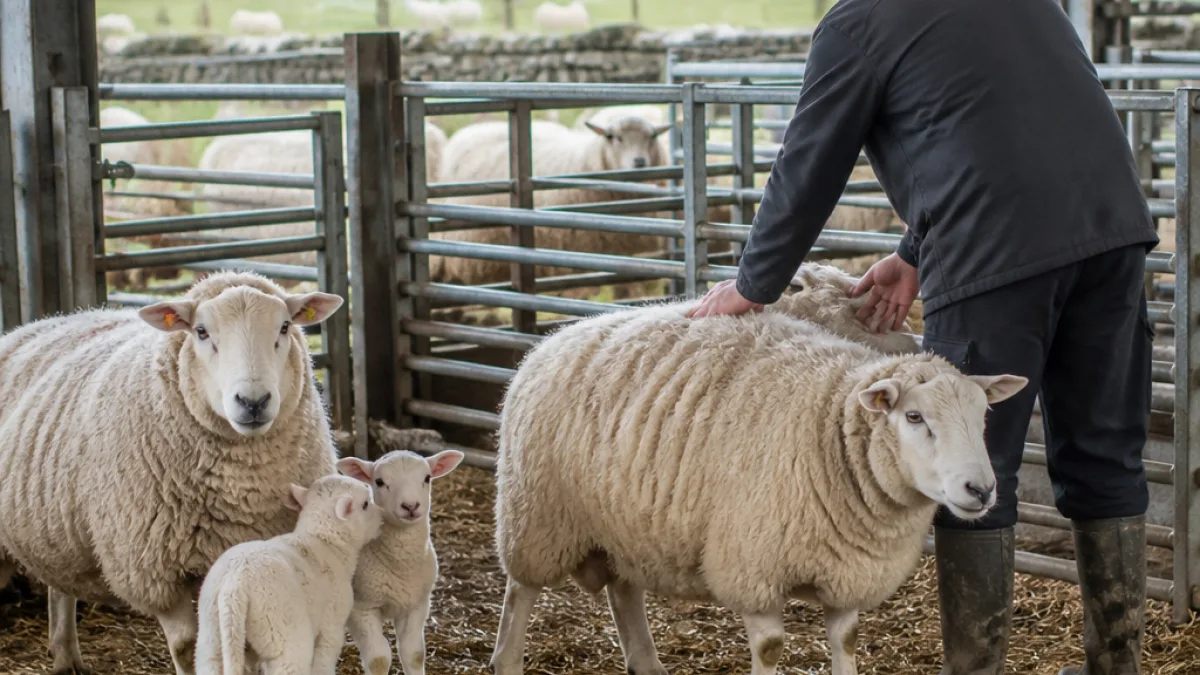
She stressed that visual assessment was only sufficient at the extremes. In other cases, the ewe needs to be handled, with the assessment made while the animal is standing and the hand placed consistently on the same area of the body.
“Extremes of condition score can be assessed by the naked eye. But in all other instances, it’s a case of physically handling animals.”
Wright told the event that scoring remained subjective, but that useful and consistent results could be achieved with experience. She advised avoiding scores below two and above four, describing these as extremes that should not be present in the flock.
Targets differ between lowland and hill flocks
For lowland ewes, the recommended level given at the event was a BCS of 3.5 from tupping through to lambing. Hill flocks can operate at a level half a score lower, reflecting the different production systems and conditions in which those ewes are kept.
| Flock type | BCS guidance | Period highlighted |
|---|---|---|
| Lowland ewes | 3.5 | From tupping to lambing |
| Hill flocks | Half a score below the lowland target | As outlined at Flock Focus 2026 |
The score can fall as ewes rear lambs, because their energy demand rises while they are producing milk. Wright said this period should therefore be reflected in the flock’s nutritional strategy rather than treated as a stage when condition loss can be ignored.
Some loss before weaning is expected, but the condition of the ewe needs to be rebuilt before the next breeding period. The guidance presented at the event was to restore lowland ewes to a score of 3.5 at tupping, using good grass over a period of six to eight weeks after weaning.
Handling remains central to monitoring
The advice places emphasis on repeated physical assessment rather than relying solely on appearance. A consistent approach allows changes in condition to be identified at key points in the breeding cycle and provides a basis for adjusting the flock’s nutrition.
- Check condition using the same body area each time.
- Handle ewes while they are standing on all four feet.
- Pay particular attention to condition between weaning and tupping.
- Account for the higher energy requirement of ewes rearing lambs.
The event’s findings link ewe condition with both the quality of the early milk supply and the subsequent growth of lambs. For flock managers, the main management point is the timing of recovery: ewes may lose condition during lactation, but they should be brought back to the appropriate breeding target before tupping.