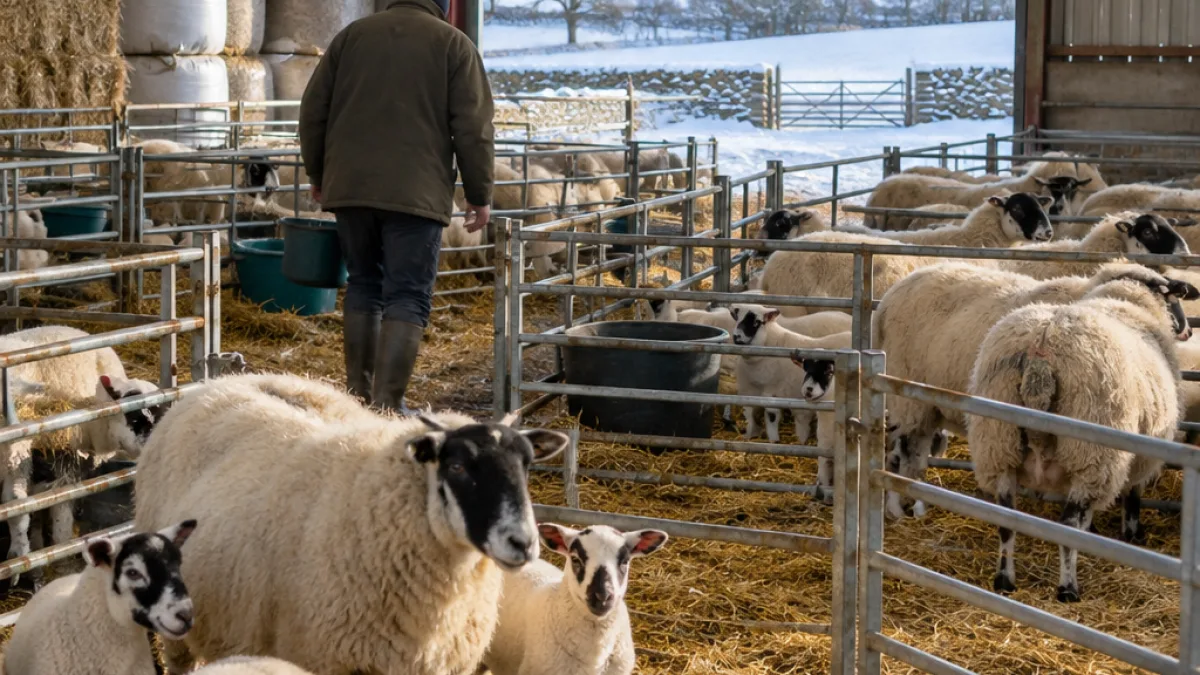
Heavy snowfall and a sharp fall in temperatures across northern parts of China’s Xinjiang Uygur Autonomous Region have prompted additional measures at a Suffolk sheep breeding base in Manas County.
The weather was reported to have brought rain and snow to Manas County, in Changji Hui Autonomous Prefecture, with temperatures in mountainous areas falling below freezing. Local animal husbandry authorities responded with measures intended to protect livestock from damp and cold conditions.
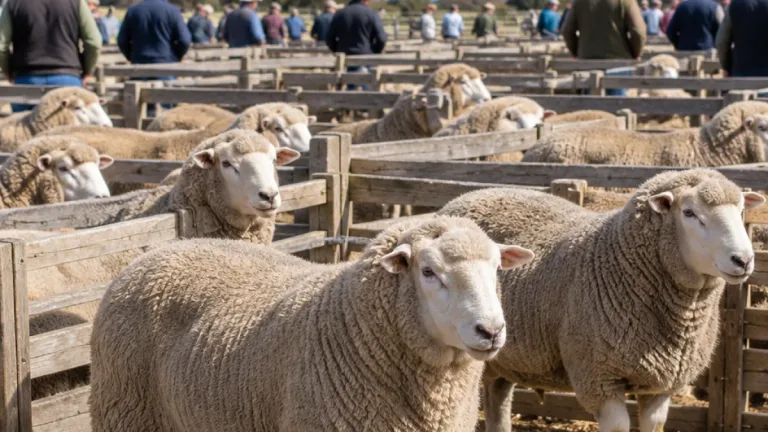
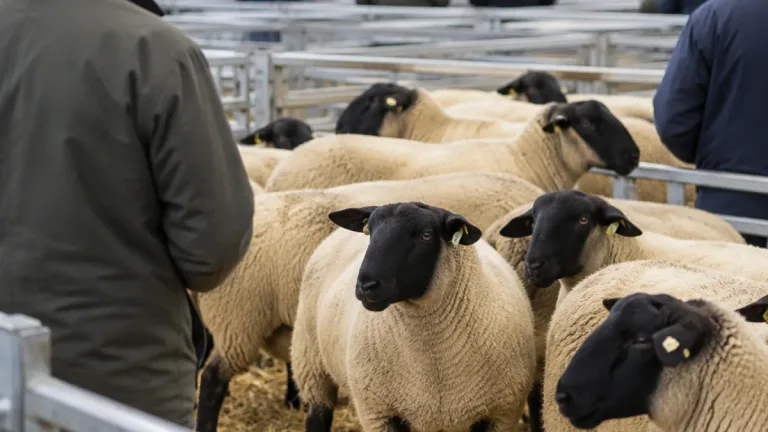
At the Suffolk Sheep Core Breeding Base in Manas County, sheep were being managed according to breed and stage of growth. The approach was described as targeted management, with groups formed to reflect the animals’ differing requirements.
“The temperature has dropped over the past two days. Our factory has prepared 2,400 tons of forage. We’ll also increase the feeding of concentrated feed to the lambs subsequently to raise their survival rate to over 95 percent,” said Ren Chenkai, a technician from the Suffolk Sheep Core Breeding Base in Manas County.
Measures focused on young sheep
The preparations include a substantial forage reserve and an increase in concentrated feed for lambs. Ren said the objective was to lift lamb survival to more than 95% as the colder conditions continued.
The reported response at the breeding base included:
- Preparing 2,400 tons of forage;
- Increasing concentrated feed for lambs;
- Grouping sheep by breed and individual growth stage;
- Taking measures to protect livestock from dampness and cold.
The actions formed part of a wider response to the weather across northern Xinjiang. In the regional capital, Urumqi, snow caused slippery roads and reduced visibility, while police increased patrols in areas vulnerable to icing and congestion. In Manas County, the focus was on maintaining livestock protection as snowfall and sub-zero mountain temperatures affected conditions.
Cold-weather management at the breeding base
The report places particular emphasis on the lamb crop, with additional feed being directed towards younger animals. Separating sheep by breed and growth stage also allows the breeding base to manage its flock in distinct groups during the period of falling temperatures, although no further details of the flock size or the breeds held were given.
Ren’s comments indicate that the breeding base had made forage preparations before the latest increase in cold weather. The reported target of survival above 95% relates to the lambs receiving the additional management and feeding measures; the report did not provide a final outcome.
The weather response demonstrates the immediate priority placed on feed supplies and protection from wet and cold conditions at the Manas County facility as snowfall affects northern Xinjiang.