Research by Cardiff University has examined the long relationship between sheepdog breeding, shepherding and farming culture in Wales and New Zealand.
The work, carried out with the University of Waikato, is presented in Making Sense of Sheepdogs. The academic book follows the movement of working dogs, shepherds and agricultural knowledge between Britain and New Zealand over approximately 150 years.
Working dogs and farming identities
Rather than treating sheepdogs solely as tools for moving livestock, the research considers how they became connected with rural identity, migration, breeding and changes in agricultural practice. It also examines the influence of disease and the movement of people and animals on the development of farming communities.
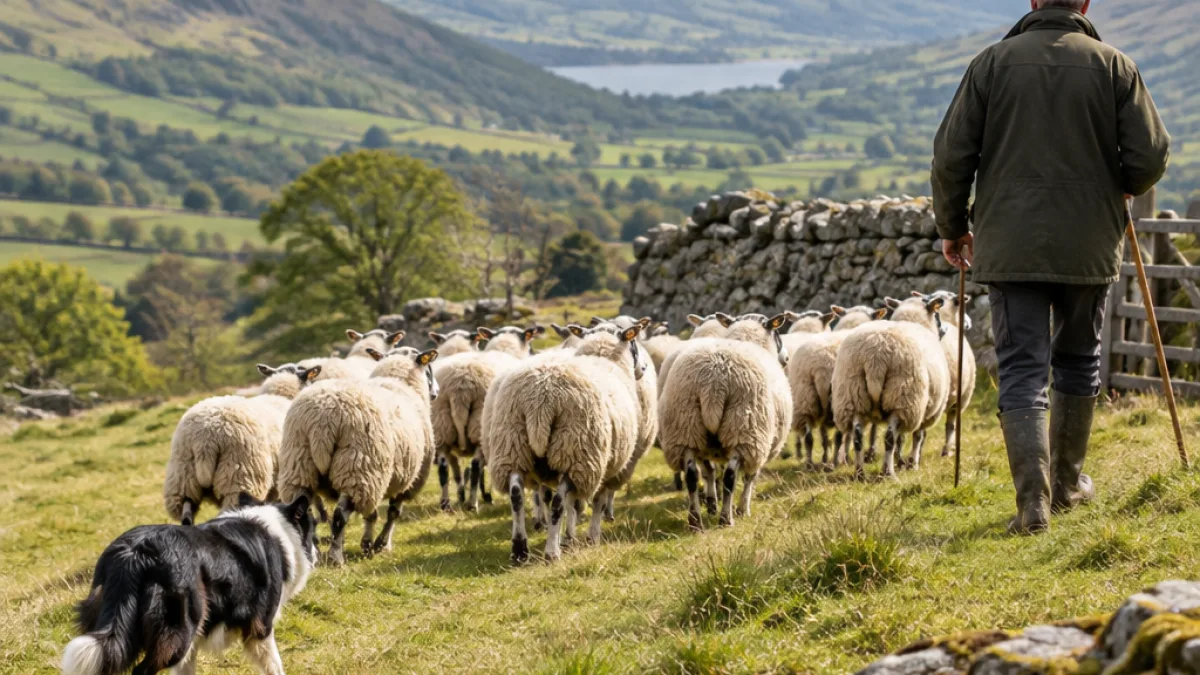
Professor Gareth Enticott, who led the study, said the relationship between dogs, shepherds and landscapes had helped create distinctive farming cultures. The research places the Border Collie and the New Zealand Huntaway at the centre of that comparison, while also considering the different conditions in which the two working traditions developed.
“At its heart is a simple idea: sheepdogs do more than move sheep. The relationships between dogs, shepherds and landscapes have helped shape distinctive farming cultures, from the silent stare of the Border Collie to the bark of the New Zealand Huntaway.”
The book describes the modern Border Collie as emerging from nineteenth-century sheepdog trials. Those competitions promoted particular ideas about appearance, order and improvement, and helped establish a more standardised view of the ideal working dog.
Different paths for two working breeds
The International Sheep Dog Society is identified as an important organisation in spreading those values across the British Empire. In New Zealand, however, some shepherds considered the imported style of dog unsuitable for local conditions. That disagreement led to arguments over the most useful breeding priorities, working methods and definition of a good sheepdog.
- Border Collie: linked by the research to nineteenth-century trials and the spread of a standardised working ideal.
- New Zealand Huntaway: developed through practical selection and repeated experimentation by shepherds.
- Wales and New Zealand: connected through the movement of dogs, people and farming knowledge.
Professor Enticott said the Huntaway did not arise from one breeder or a single bloodline. Instead, its development reflected generations of practical decisions made by shepherds working in New Zealand conditions.
“This is the first global history of the Huntaway, which was more than a breed. Rather than emerging from a single breeder or bloodline, the Huntaway developed through generations of experimentation and practical shepherd knowledge.”
The study therefore presents sheepdogs as part of the wider history of livestock farming, rather than as a separate subject from flock management. Its comparison of Wales and New Zealand links breed development with the movement of farming systems and the ways shepherds adapted working dogs to local landscapes.