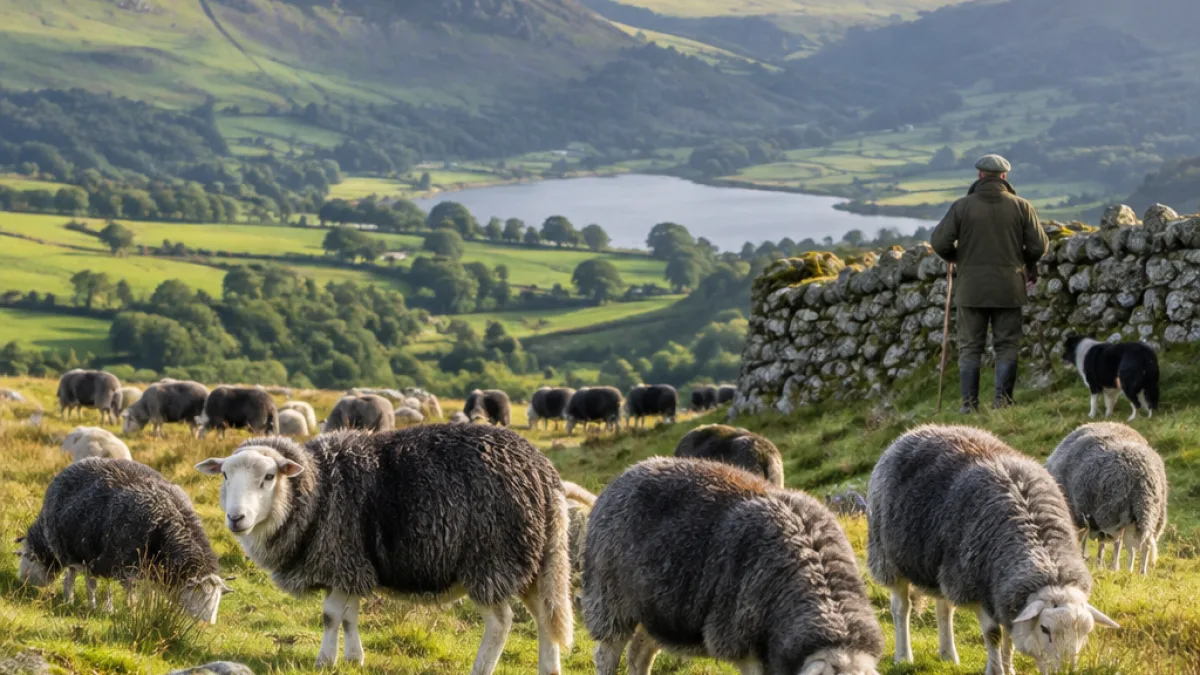
Herdwick sheep remain at the centre of a Lake District farming legacy established by Beatrix Potter, more than 80 years after the author and breeder died. Potter left more than 4,000 acres and around 14 farms to the National Trust in 1943, with the organisation required to continue grazing Herdwicks on the land.
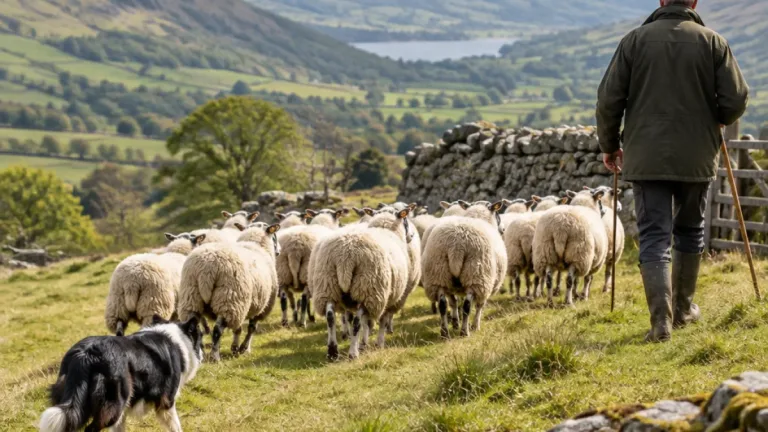
The breed is closely associated with the high fells of the Lake District, where its small size and hardiness suit cold, wet conditions and relatively poor grazing. Herdwicks also possess a traditional grazing behaviour known as “hefting”. Flocks learn the boundaries of their own area of open fell, or heft, and that knowledge is passed from ewe to lamb over successive generations.
“hefting.”
That ability has helped maintain sheep grazing across open hillsides without the need for fences. The breed’s role is therefore linked not only to livestock production, but also to the management of the landscape in which it developed.
From author to Herdwick breeder
Potter was born in London in 1866 and spent childhood holidays in the Lake District. Income from her early books, including The Tale of Peter Rabbit, enabled her to buy Hill Top, a farm near Sawrey, in 1905. She subsequently acquired further farms and land in the area.
After marrying local solicitor William Heelis in 1913, Potter devoted much of her time to farming. She developed a particular interest in Herdwicks and became a serious breeder, winning prizes at local agricultural shows with her shepherd, Tom Storey.
In 1943, Potter was elected president of the Herdwick Sheep Breeders’ Association. She was the first woman chosen for the position, although she died before taking it up on 22 December that year.
Farming and conservation
Potter’s interest in the breed formed part of a wider effort to protect Lake District farms from development. She was a friend of Canon Hardwicke Rawnsley, one of the founders of the National Trust, and shared his concern that the area’s farms and landscapes could be lost.
She bought several properties with conservation in mind, including the Troutbeck Park estate in 1923, and worked with the National Trust as it built up its collection of Lake District farms. Her will ensured that the land she left would continue to be associated with Herdwick grazing.
- Potter bought Hill Top in 1905 using income from her books.
- She became a noted Herdwick breeder and was elected president of the breed society in 1943.
- Her bequest to the National Trust included more than 4,000 acres and around 14 farms.
The continuing presence of Herdwicks on those holdings reflects the breed’s long-standing place in the Lake District’s upland farming system. It also preserves the link between Potter’s work as a farmer and the landscape conservation principles that shaped her later life.