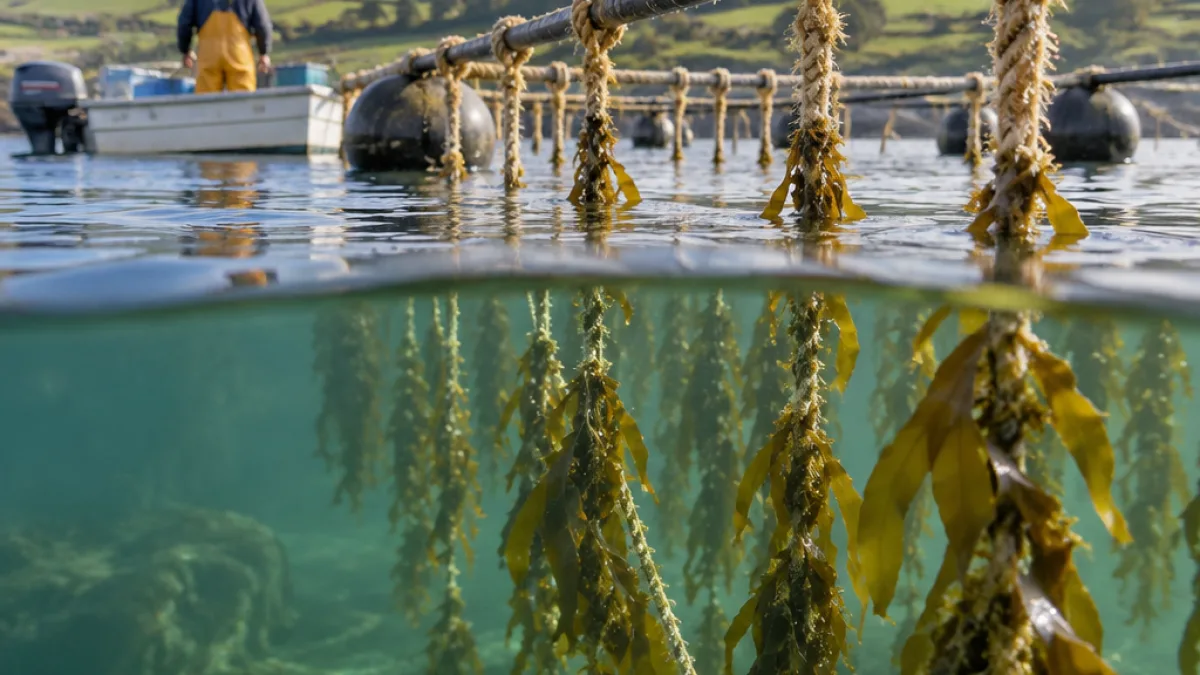
British sheep farmers could gain access to a new outlet for wool after trials found that ropes made from Whiteface Dartmoor fibres could support kelp cultivation in coastal waters.
The work has been led by Dartmoor-based business Twool, working with researchers at Queen’s University Belfast and local farmers. It is focused on using wool as an alternative to synthetic rope in seaweed farming, where kelp is generally grown on submerged lines anchored to the seabed.
Wool lines tested in Northern Ireland
Wool ropes were placed in Strangford Lough, Northern Ireland, in February 2024. They remained in the water for six months and successfully supported the growth of kelp, a type of seaweed used in products including fertilisers and cosmetics.
The project’s use of Whiteface Dartmoor wool reflects the physical properties of the fibre. The length and strength of the wool fibres were identified as making them suitable for rope manufacture, providing a possible application beyond conventional wool processing and textile production.
Twool secured funding through the Farming in Protected Landscapes (FiPL) programme in 2024 to scale up production of the ropes. The business also received nearly £10,000 from Innovate UK in 2024-25 for additional trials.
- Wool ropes were deployed in Strangford Lough in February 2024.
- The lines stayed in the water for six months and supported kelp growth.
- Twool received nearly £10,000 from Innovate UK in 2024-25 for further trials.
Processing capacity on Dartmoor
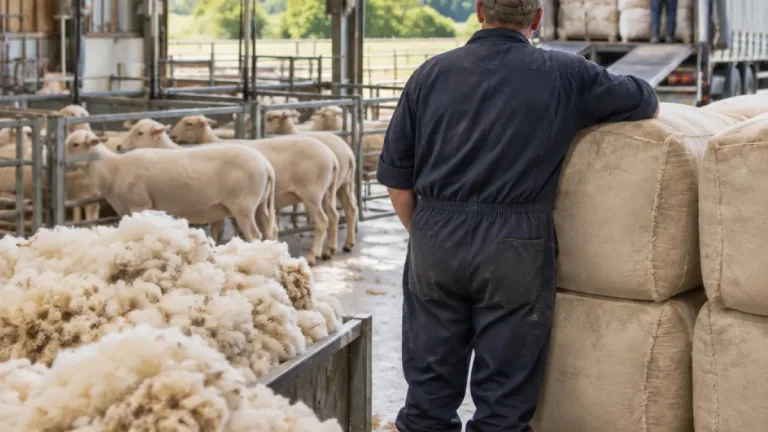
The work is taking place against a difficult economic background for some British wool producers. The cost of shearing sheep and transporting fleeces can exceed the value of raw wool, making alternative uses and local processing important considerations for farms supplying the material.
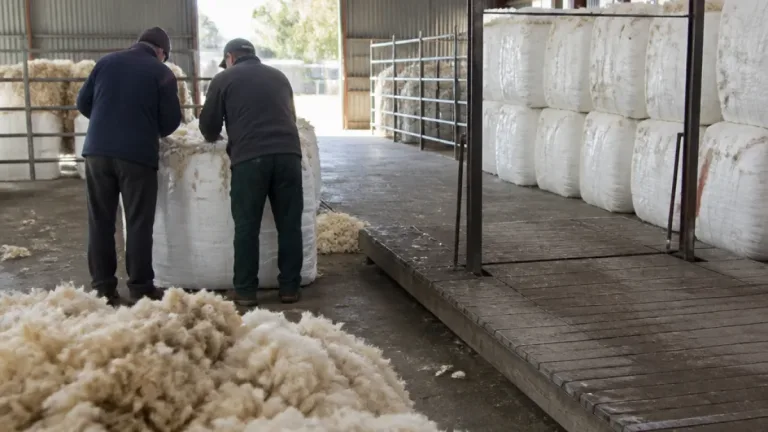
Investment has also been made in facilities handling wool from farms in the Dartmoor area. Greenwell Farm, which has collected, stored and packed wool for local farmers since 2017, received approximately £25,000 through FiPL funding in 2025-26.
The grant supported the purchase of a new wool press and improvements to the farm’s existing facilities. Before the investment, Greenwell Farm was handling up to 50 tonnes of wool each year from more than 50 local farms. The funding is intended to allow the business to support more local wool, although the extracted report does not give a further capacity figure.
Together, the rope trials and processing investment illustrate two strands of work around Whiteface Dartmoor wool: developing a non-textile market in seaweed farming and improving the infrastructure available to farmers supplying fleeces locally.