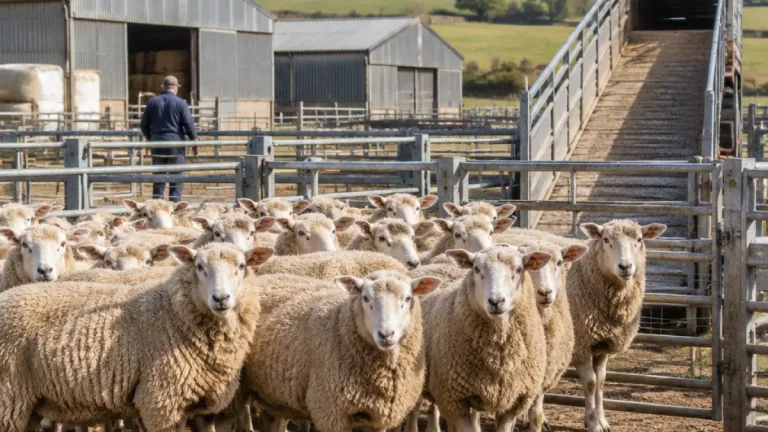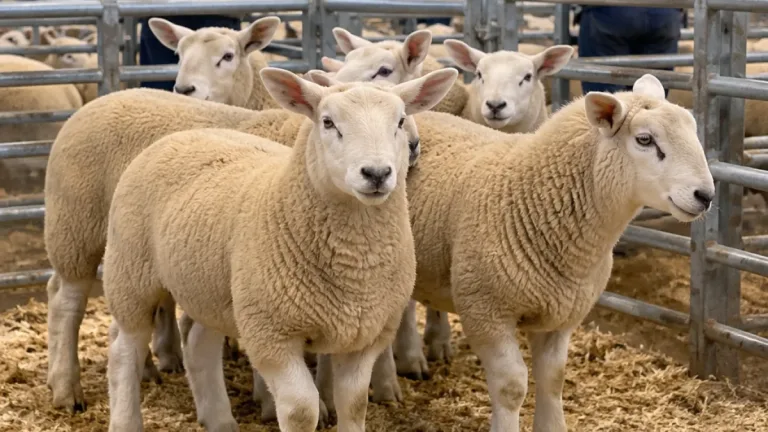
Farmers and farming representatives in Cumbria have given a guarded welcome to the new UK-EU Sanitary and Phytosanitary (SPS) Agreement, saying it may reduce the administrative burden on food businesses exporting to Europe. The agreement is particularly relevant to the red meat sector, including sheep producers, because the EU remains a major market for British food exports.
Liz Staley, an upland farmer from Mallerstang, said the arrangement represented progress for businesses facing export paperwork and other procedural barriers. She said simplifying the process could improve efficiency for companies operating in international markets, although she stressed that the effect would depend on how the agreement was implemented.
“Simplifying export procedures should help improve efficiency and ease the burden on businesses operating across international markets.”
Ms Staley also warned that lower barriers to trade should not come at the expense of the standards expected of food entering the UK. Her concerns focused on the need to preserve consumer confidence and prevent British farmers from being placed at a disadvantage against imported food produced under different conditions.
Standards and competition remain concerns
The agreement has been welcomed in principle because it could reduce the paperwork and costs associated with selling food into the EU. For livestock businesses and processors, the practical value will depend on the export procedures that apply to consignments and how much duplication can be removed from the existing system.
However, Ms Staley said farmers remained frustrated that the opportunities associated with leaving the EU customs framework had not benefited every part of the food and farming industry. She argued that more safeguards should have been put in place to support domestic production and maintain a level playing field.
“Maintaining those standards is critical to ensuring consumer confidence, food quality, and a level playing field for domestic producers.”
Her position highlights several issues facing sheep farmers and the wider red-meat supply chain:
- the amount of paperwork and bureaucracy involved in exports to the EU;
- the cost and efficiency of moving British food into European markets;
- the standards applying to food imported into the UK; and
- the competitiveness of domestic producers within the post-EU trading system.
Broader support concerns raised
Tim Farron, MP for Westmorland and Lonsdale, also welcomed progress on reducing export costs and administration. He said that making it easier for farmers and food producers to sell into Europe was an issue the Liberal Democrats had supported for a long time.
Mr Farron linked the trade discussion to a wider concern about financial support for farming. He said that, for the first time since the Second World War, farmers no longer had a single universal scheme supporting food production. He also criticised the Government’s environmental schemes, arguing that available funding had been taken up by larger landowners while smaller family farms struggled to benefit.
The comments come as upland and livestock businesses continue to weigh the value of improved access to European markets against the costs of meeting trade requirements and the changing structure of agricultural support. The agreement has therefore been received as a potential reduction in export friction, rather than as a complete answer to the competitive and financial pressures facing British farms.