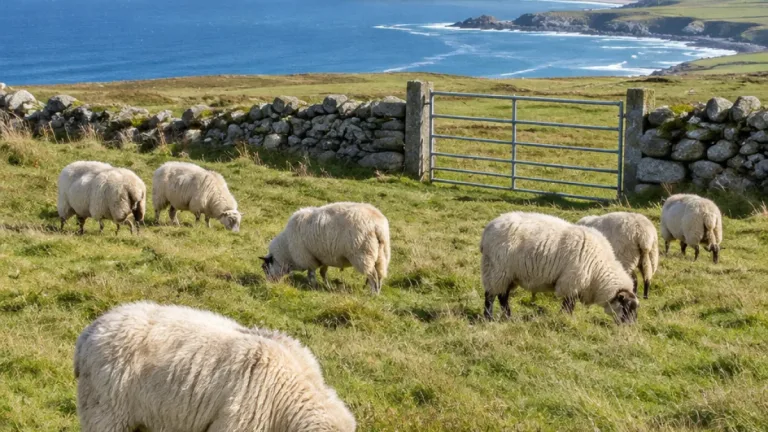
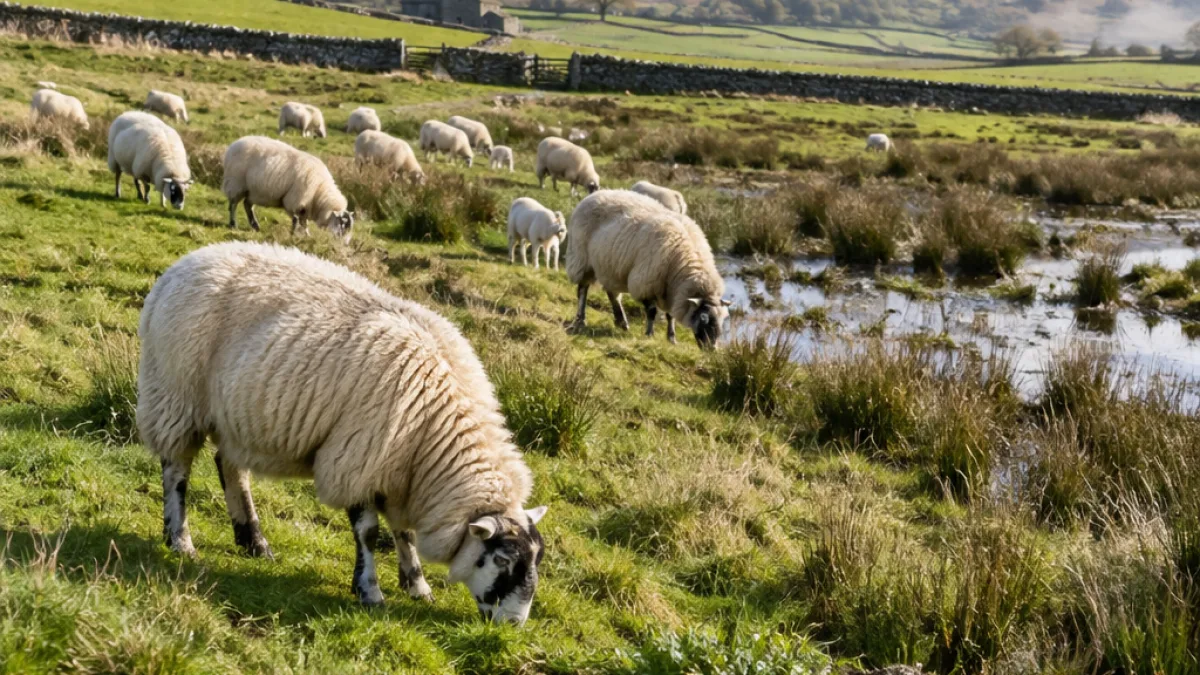
Liver fluke risk in Welsh livestock may depend on soil characteristics, pasture composition and the grazing behaviour of individual sheep, according to new research from Aberystwyth University.
The findings add detail to the established link between wet conditions and infection. Liver fluke is a parasitic disease affecting sheep and cattle, and its impact on UK agriculture has been estimated at up to £300 million each year. Transmission involves the small snail Galba truncatula, which is commonly found in wet, muddy habitats and acts as an intermediate host for the parasite.
Three stages of the parasite’s life cycle examined
Researchers carried out three separate studies to investigate why infection levels can differ between farms and even between animals grazing the same fields. Each study focused on a different part of the parasite’s development and on the conditions that may influence exposure.
- One study examined whether soil properties could help explain variation in liver fluke risk.
- A second assessed whether grass and forage species influenced the ability of liver fluke larvae to attach to vegetation after leaving their snail host.
- A third used plant DNA sequencing from lamb faecal samples to compare the diets of infected and uninfected lambs.
The soil research was published in Parasitology, while the work on grass and forage species appeared in Parasites & Vectors. The dietary study was published in Veterinary Parasitology.
“Liver fluke risk is often associated with wet conditions, but these studies show that the picture is more complex.”
That was the assessment of Dr Rhys Jones, principal investigator at Aberystwyth University. His comments underline the difference between identifying a generally favourable environment for the parasite and understanding the specific risk faced by animals on individual farms or fields.
Pasture and grazing behaviour included in the assessment
The research considered the period after liver fluke larvae leave the snail host and before they develop into infective cysts on vegetation. This part of the life cycle means that the type of grass or forage present may be relevant to the likelihood of larvae attaching to plants that livestock later eat.
The lamb diet study used plant DNA sequencing to establish what infected and uninfected animals had been grazing. This approach allowed the researchers to examine variation between sheep sharing the same wider grazing area, rather than treating all animals in a flock as having identical exposure.
For flock managers, the work provides a research basis for looking more closely at the characteristics of individual fields and at how animals use them. It does not replace veterinary assessment or provide a universal treatment programme. Farmers dealing with liver fluke concerns should discuss the findings and any parasite-control decisions with their own vet or adviser.
Potential for more targeted control
Aberystwyth University said the studies could improve understanding of why liver fluke risk is not uniform across farms. Factors associated with wet ground remain important, but the research indicates that soil, vegetation and animal behaviour also need to be considered when interpreting that risk.
“By looking at soil characteristics, pasture composition and the livestock grazing behaviour, we can begin to understand why risk varies between farms and even between animals grazing the same fields.”
Dr Jones said the longer-term value of the work could be in helping farmers identify risk more precisely and support more targeted approaches to parasite control. The research is particularly relevant to sheep enterprises where animals move between fields with different soil and vegetation conditions, although the reported work concerns Welsh livestock more broadly.
He added that the knowledge could help farmers make more informed decisions about liver fluke risk. The studies therefore point towards a more detailed assessment of the interaction between the parasite, its snail host, the grazing environment and the animals using it, rather than relying on rainfall or wetness alone.