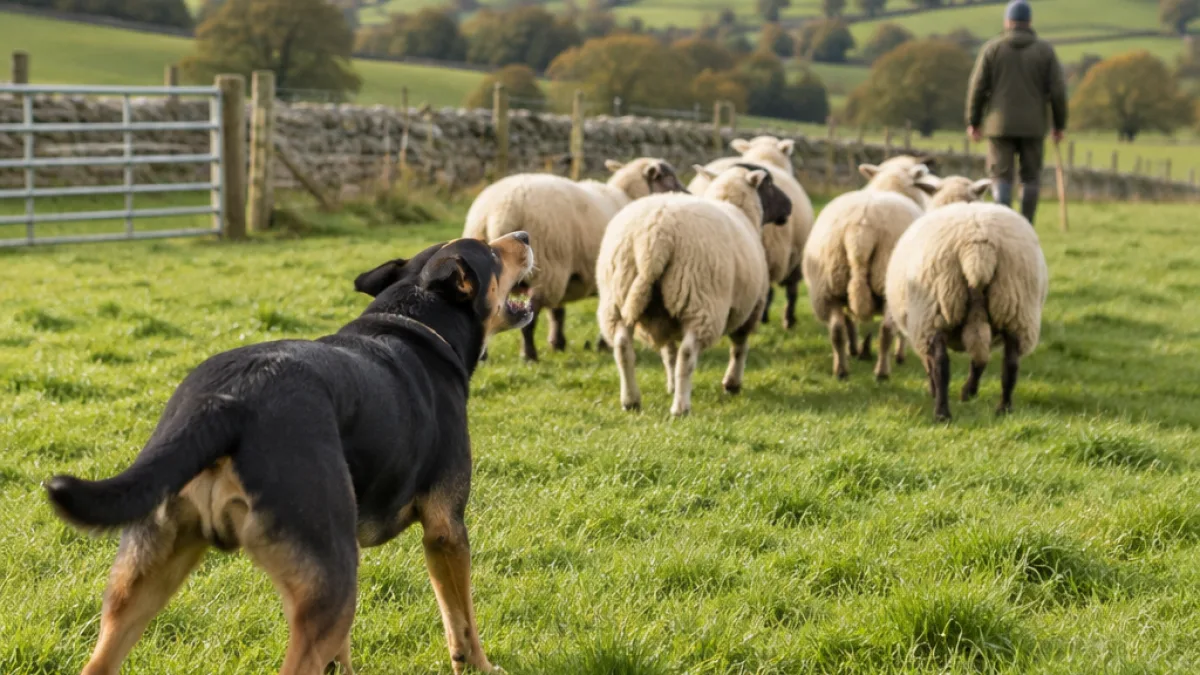
The New Zealand huntaway has a working style that sets it apart from the silent control traditionally associated with British sheepdogs. Developed for sheep stations, the breed is known for using its voice to move stock, a trait now celebrated through “bark-ups” at pubs and agricultural events across the country.
The competitions are built around a straightforward test: finding the dog with the strongest or most effective bark. Although the events can appear unusual to people unfamiliar with the breed, their origins lie in the demands of New Zealand’s extensive sheep farming systems and in the way livestock work developed during the country’s colonial period.
“Why would anyone hold a competition to find the sheepdog that barks the loudest?”
That question is posed by Gareth Enticott in a feature for RNZ examining the history of the huntaway and the contrasting ideals that have shaped sheepdogs in Britain and New Zealand. The article places the huntaway within a wider history of working dogs, showing how different farming environments encouraged different ways of handling sheep.
From silent control to vocal work
Enticott describes the modern sheepdog as a product of the Victorian period. Queen Victoria was a supporter of the collie and bought dogs from shepherds working along the England-Scotland border. Those shepherds were also central to the sheepdog trialling movement that developed at the beginning of the 20th century.
In that tradition, a high-quality sheepdog was expected to demonstrate discipline, intelligence, restraint, obedience and hard work. Silence while working was particularly valued. The preferred dog reflected the character expected of the shepherd: controlled, industrious and able to manage stock without unnecessary noise.
Organisations including the International Sheep Dog Society helped to strengthen those ideals. Under its honorary secretary, James Reid, the border collie was presented not only as a useful farm animal but as the highest expression of deliberate canine improvement. The dog also became associated with wider ideas about good stockmanship and agricultural progress as it spread through Britain’s settler colonies.
A breed shaped by New Zealand’s sheep stations
Scottish settlers had taken sheepdogs to New Zealand by the middle of the 19th century. The huntaway emerged in that setting, but its role differed from the model promoted through British trialling. Rather than depending primarily on quiet control, it used a powerful bark as part of the work of gathering and moving sheep.
That distinction gives the huntaway a particular place in the history of sheep farming. The dog’s voice is not simply a novelty or a performance feature: it is connected to the conditions in which New Zealand shepherds worked and to the practical demands placed on dogs managing sheep across the country’s stations.
- Huntaway: a New Zealand sheepdog developed for station work.
- Bark-ups: competitions held at pubs and agricultural events to identify the dog with the best bark.
- Working tradition: a contrast with the quiet, controlled style promoted through British sheepdog trialling.
The popularity of bark-ups shows how a working characteristic can become part of a national farming culture. The events preserve public interest in a dog whose defining feature developed from livestock work, while also highlighting the different forms that sheepdog breeding and handling have taken across the wider sheep industry.