Questions have been raised over the environmental basis of Australia’s largest carbon farming method after researchers examined properties where native vegetation regeneration is being used to generate carbon credits. One of the properties highlighted is Wancobra station, north of Bourke in New South Wales, which became a carbon farm under former owner Glenn McGrath.
McGrath sold Wancobra to his brother Dale shortly after discussing the project publicly in 2015. The family has not been accused of wrongdoing. The property is instead being used as an example in a wider dispute over whether the vegetation credited under Australia’s Human Induced Regeneration (HIR) method would have occurred without the carbon project.
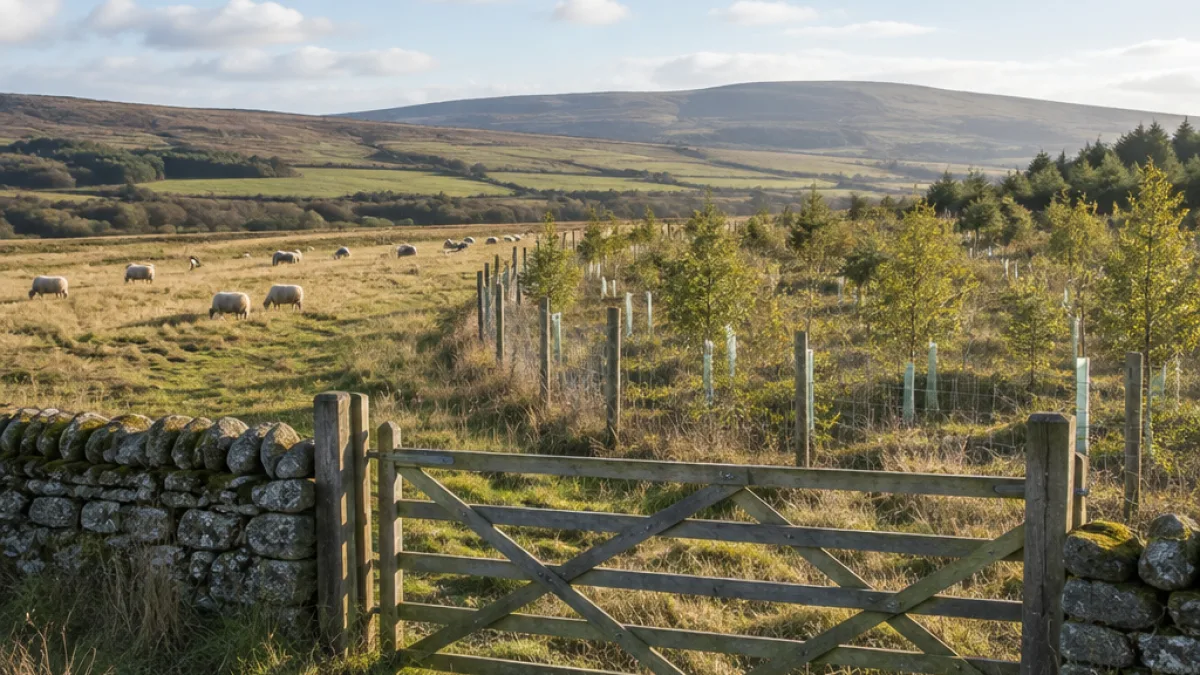
HIR is based on reducing grazing pressure on degraded farmland, with the expectation that native forests will regenerate and remove carbon dioxide from the atmosphere. The carbon is then retained for a period stated as between 25 and 100 years, allowing credits to be issued and sold.
A major source of carbon credits
There are 429 HIR properties across Australia, covering an area described as larger than Japan. Most are located in marginal rangelands. The method has become a central part of the country’s carbon offset market because it can generate large volumes of credits at relatively low cost.
HIR credits account for one-third of the credits purchased by major emitters to help meet emissions reduction obligations under Australia’s Safeguard Mechanism. The scale of the system means that questions about how its credits are generated extend beyond individual properties and into national climate policy.
“We will set aside parts of the property to grow [mulga trees] and those trees will take carbon out of the atmosphere and [we’ll] still be able to run our stock … We are always looking for ways to get a different income stream.”
That statement was made by McGrath to the Australian Financial Review in 2015. It reflected the attraction of combining continued livestock production with a new source of farm income, while allowing parts of a property to be managed for vegetation regeneration.
Researcher disputes the regeneration claims
Professor Andrew Macintosh has been a long-standing critic of HIR. At Wancobra, he argued that the vegetation visible on the property did not demonstrate regeneration attributable to the carbon project. He said the area appeared to contain established woodland and mature mulga rather than a new forest created during the project period.
“We’re meant to be standing in a 16-year-old forest. Look at it! It’s an ancient woodland, for Christ’s sake. And there’s nothing, nothing at all that could possibly be attributed to the [carbon] project.”
Macintosh described the wider HIR market as a “$1.5 billion to $2 billion scam”. That is his characterisation of the system, rather than an established finding that landholders participating in it have acted improperly.
- Method: Human Induced Regeneration, based on controlling grazing pressure and anticipated native forest recovery
- Scale: 429 properties across Australian rangelands
- Retention period: carbon storage is stated as lasting between 25 and 100 years
- Market role: HIR supplies one-third of credits bought by major emitters under the Safeguard Mechanism
The dispute is relevant to extensive livestock businesses because HIR links grazing management with the creation of tradable environmental assets. The central question raised by Macintosh is whether the credited carbon represents additional removal from the atmosphere, or vegetation that was already present and would have remained without the project.