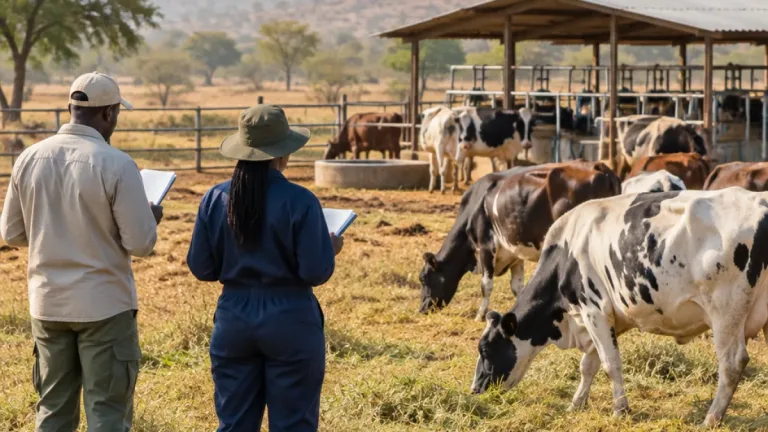

Laboratory-created scents are being tested in Nepal as a non-physical barrier to prevent tigers and leopards entering livestock areas and other locations where encounters with people and animals are considered high risk.
The research is being carried out by Cornell University, WWF Nepal and local forest authorities. Known as “Bio-Boundaries”, the approach uses small devices to release chemical substances designed to imitate the territorial signals used by wildlife.
Field tests along a wildlife corridor
Testing began in October 2024 along the 13-kilometre Khata Biological Corridor, which links Bardia National Park in Nepal with the Katarniaghat Wildlife Sanctuary in India. Researchers established locations where scent-emitting devices were used alongside control sites without the substances.
The aim is to influence predator movement before animals reach livestock corrals or other areas where they may come into conflict with people. At some trial locations, tigers and leopards approached the devices, investigated them and then turned back without crossing the perceived boundary.
“The animals would come to the source of the scent and investigate, but they did not cross the boundary they perceived.” — Shashank Poudel, Head of Wildlife Programs at WWF Nepal, as reported by Mongabay Environment Online
Different chemicals produced different responses
The early findings show that the effect was not consistent across the formulations or the two predator species. Of the 10 chemical substances examined, three were associated with a reduction in leopard presence and two were linked to fewer tiger visits.
| Measure | Result reported |
|---|---|
| Chemical substances tested | 10 |
| Substances associated with reduced leopard presence | 3 |
| Substances associated with reduced tiger presence | 2 |
| Corridor used for testing | 13 kilometres |
Some of the scents had the opposite effect. Tigers were attracted to certain devices and returned repeatedly, an outcome that the researchers had not intended. The response also varied according to the species and the location of the test.
That variation is significant for livestock protection because a scent that discourages one predator may have little effect on another, while a different formulation could increase animal activity around the test area. The research therefore remains focused on identifying which chemical signals can create a reliable deterrent without drawing predators towards livestock.
Potential use around livestock areas
The project is examining whether these artificial territorial signals can help keep tigers and leopards away from corrals and other high-risk sites. The devices are intended to create an invisible boundary rather than a physical fence, although the extracted findings do not establish that the method is ready for wider use.
For farmers in areas where livestock production overlaps with large predator habitat, the trials provide evidence that animal behaviour can be influenced by selected scents. However, the mixed results reported from Nepal underline the need for further testing before the technology can be regarded as a dependable livestock-management tool.