Prime lamb prices have eased in recent weeks, but the market remains well ahead of its position a year earlier as supplies tighten and processors begin preparing for the Christmas period.
AHDB’s latest figures show that the GB deadweight lamb SQQ fell by 4.3p/kg to 719.4p/kg in the week ending 17 October. Despite the weekly decline, the figure was 57.1p/kg higher than at the same time last year, underlining the strength of the sheep trade during 2026.
| Indicator | Period | Figure | Change |
|---|---|---|---|
| GB lamb SQQ | Week ending 17 October | 719.4p/kg deadweight | Down 4.3p/kg week on week |
| Prime sheep slaughterings | Previous week | 218,000 head | 5,000 fewer head than the preceding week |
| Prime sheep slaughterings | Compared with 2025 | 218,000 head | 5,200 fewer head than the same period in 2025 |
Supply continues to support the market
Estimated prime sheep slaughterings fell by 5,000 head in the previous week to 218,000. That was also 5,200 head below the equivalent period in 2025, providing a supply backdrop which has helped maintain prices despite the recent reduction in the SQQ.
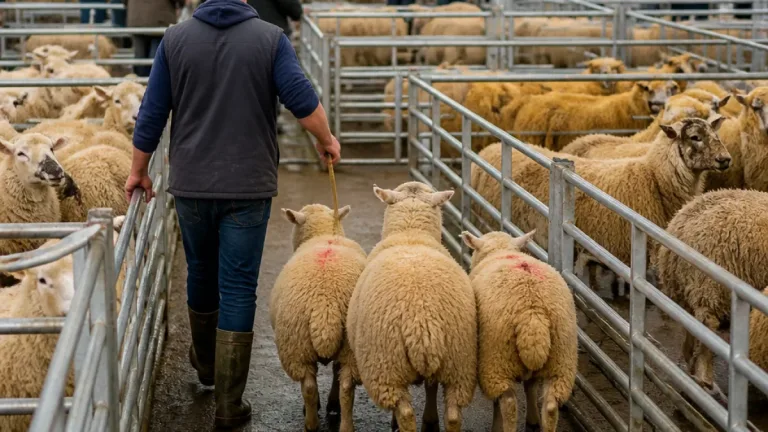
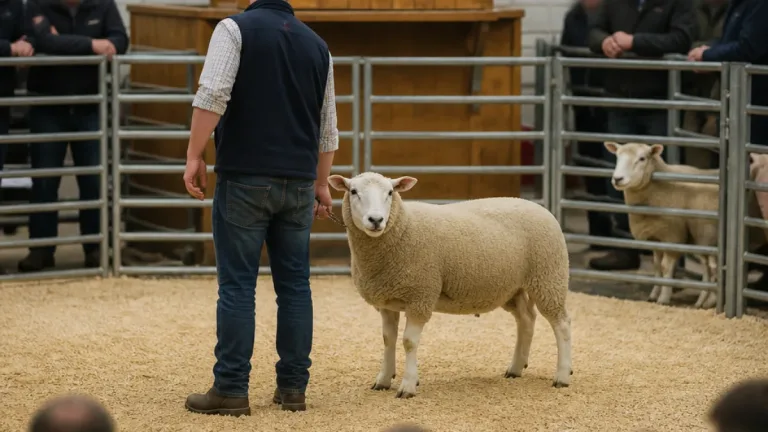
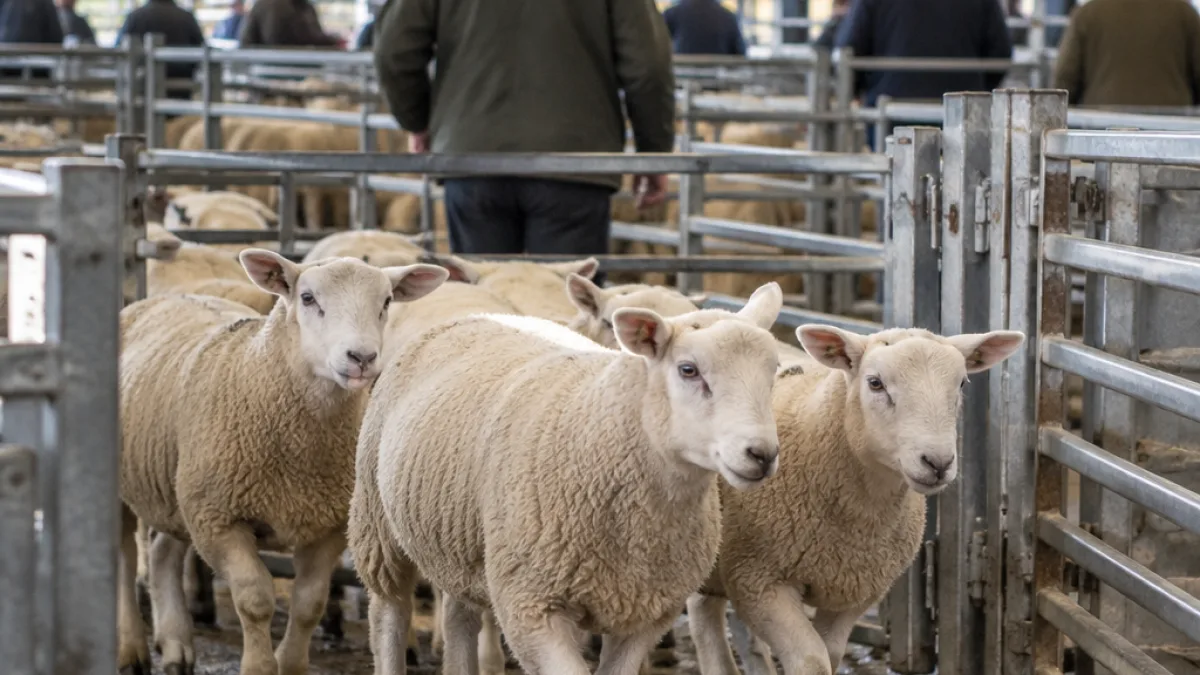
Andrew Hunter Blair, sheep auctioneer at Craig Wilson’s Ayr and Newton Stewart marts, said live markets were currently returning around 310-320p/kg. He described the level as reasonable, while noting that stronger festive buying had not yet arrived.
“Prime lambs are still averaging around 310-320p per live kg which is a reasonable trade without being on fire. We’ve seen the trade getting slightly firmer over the past few weeks which is good and we’ve seen fewer numbers coming through than last year, but the festive demand is yet to come.”
Mr Hunter Blair said farmers selling home-bred lambs appeared satisfied with current returns, although he added that the store market would benefit from an improvement. He also said export-type lambs had continued to attract interest and that the trade could strengthen if its recent direction continued.
Retail demand remains a concern
The market is nevertheless facing a weaker retail backdrop. AHDB data showed that retail lamb sales volumes fell by 11% in the 12 weeks to 4 October, while average retail prices increased by 8%. The figures indicate that higher prices have coincided with lower volumes through the retail channel.
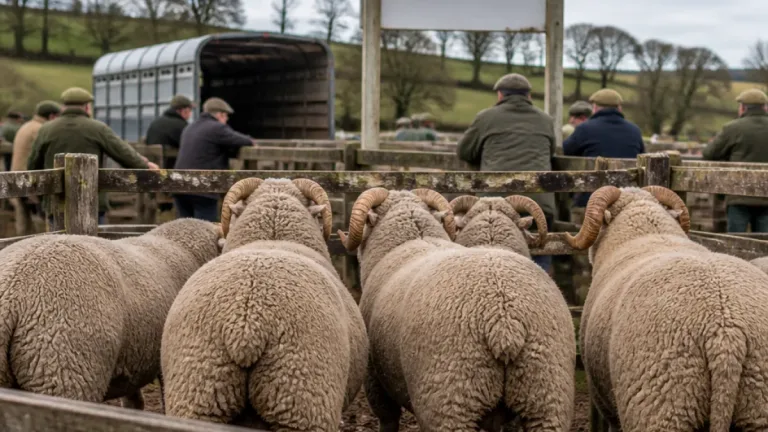
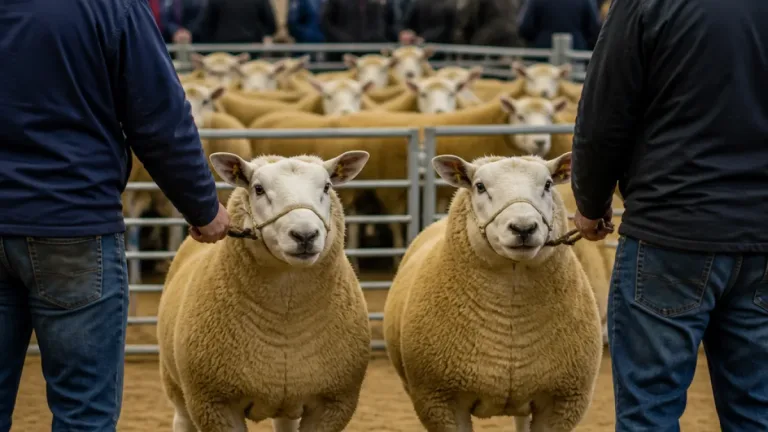
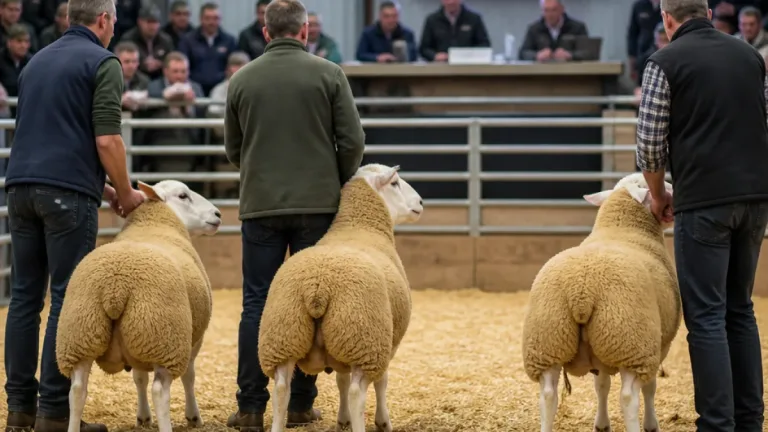
Trading conditions have varied between Scottish markets according to both weight and quality. Export-type lambs have continued to attract competition, while a greater supply of heavier lambs has placed pressure on some prices.
- AHDB recorded a GB lamb SQQ of 719.4p/kg deadweight for the week ending 17 October.
- Prime sheep slaughterings were estimated at 218,000 head, below both the previous week and the comparable period in 2025.
- Scottish auction evidence points to continued demand for export-type lambs, while heavier lambs have faced more pressure.
With processors turning their attention towards Christmas requirements, the coming weeks will show how the balance between tighter supply, festive buying and retail demand develops. The latest figures place the lamb trade above last year’s level, but also show that the market has recently lost some momentum.