A research partnership in Peru is using DNA sequencing to identify alpacas with superior fibre genetics from birth, rather than waiting until animals are older and their fleeces have been assessed after shearing.
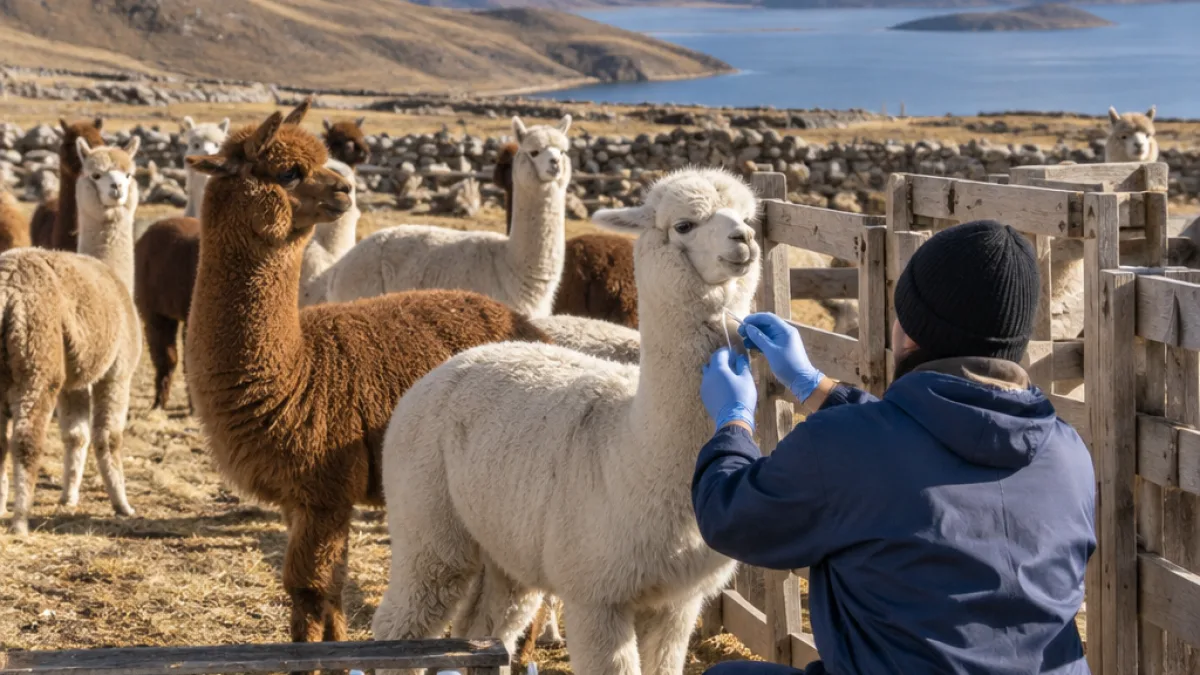
The programme involves Peru’s Universidad Nacional Agraria La Molina (UNALM), alpaca fibre company Inca Tops and biotechnology organisation MGI Tech. Together, the partners are sequencing the genomes of 1,200 alpacas at the Pacomarca research station in Puno.
Genetic selection before shearing
Each alpaca is expected to generate approximately 2.6 gigabytes of genomic data. The information is being processed using MGI Tech’s DNBSEQ T7RS platform, with the project intended to locate genetic markers associated with premium fibre traits.
A central target is fibre softness. Alpaca fleece can contain strongly medullated fibres, which have a hollow and rigid internal structure. These fibres can create a scratchy feel, making the removal or reduction of them an important objective for producers and processors supplying higher-value markets.
“The ability to breed genetically superior alpacas from birth — rather than identify them years later after shearing — could permanently reshape who leads the high-end textile supply chain.”
The first genetically selected breeders are expected by mid-2027, while their superior offspring are expected to reach highland producers by 2028. The timetable means the project is aimed not only at laboratory analysis, but at transferring the results into practical breeding populations.
Scale of Peru’s alpaca industry
Peru remains the dominant country in the global alpaca sector. It holds approximately 87% of the world’s alpaca population, with a national herd of around 4.7 million animals.
The country exported $238 million in alpaca products in 2025, an increase of 6.5% from 2024. The figures were attributed to the Alpaca Industry Association, citing PromPerú’s annual report. The research programme is therefore being developed within an industry where fibre quality has a direct connection with export value and access to premium markets.
Luxury fashion houses in Europe, the United States and Asia are competing for premium natural fibres. The Peruvian project is intended to improve the ability of breeders to identify desirable animals at an early stage, potentially shortening the interval between birth and a breeding decision based on fibre characteristics.
Project milestones
- 1,200 Peruvian alpaca DNA samples are being sequenced.
- Genomic information is being processed at the Pacomarca research station in Puno.
- Approximately 2.6 gigabytes of data are generated by each animal.
- The first genetically selected breeders are expected by mid-2027.
- Selected animals’ offspring are expected to reach highland producers by 2028.
The work places genomic selection alongside established fleece assessment, with the stated aim of identifying animals carrying the traits required for softer, higher-value fibre earlier in their productive lives.