Farmers, researchers, community groups, policymakers, schoolchildren and peatland practitioners gathered at Ireland’s first PaludiFair to examine how rewetted peatlands can support biodiversity, climate action and rural livelihoods.
Practical demonstrations and new products
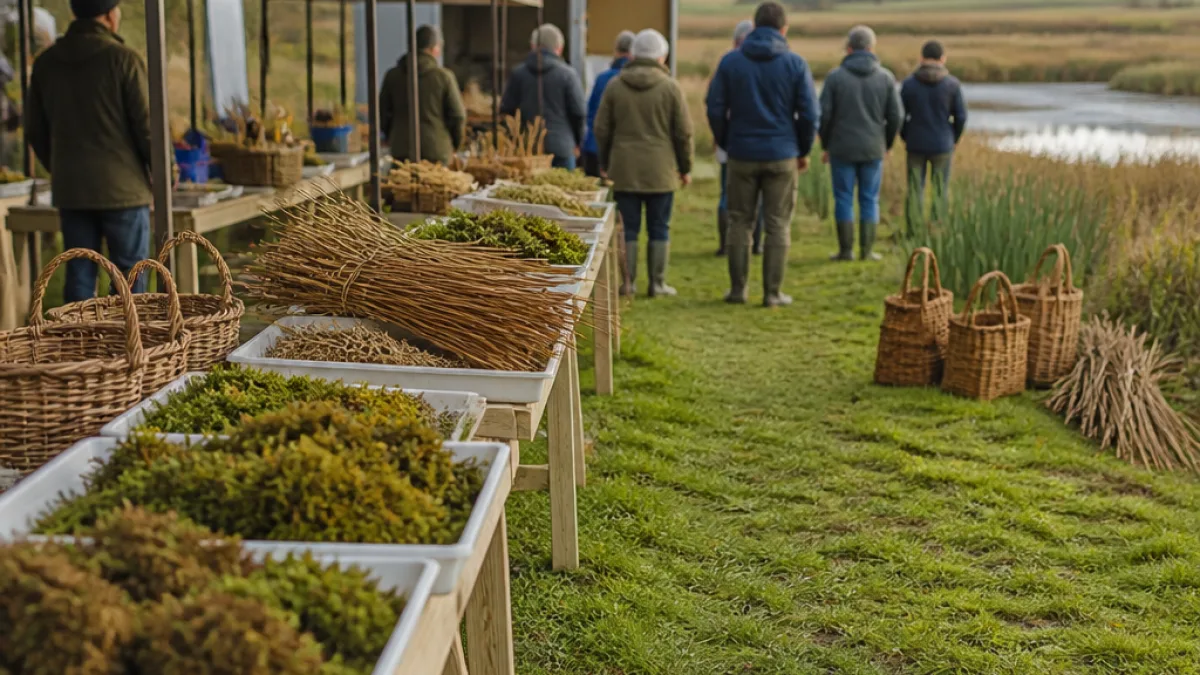
The event brought together a wide range of exhibits and practical demonstrations. Visitors could view examples from sphagnum moss and wetland crops to restoration projects and community-led conservation schemes. Practical displays and technologies on show ranged from innovative equipment for peatland management to traditional crafts such as willow basket weaving, emphasising both cultural heritage and commercial potential.
- Attendees included farmers, researchers, community groups, policymakers, schoolchildren and peatland practitioners
- Exhibits spanned sphagnum moss, wetland crops, restoration projects and invasive species management
- Activities featured lightning talks on markets, policy tools and practical restoration work
Knowledge exchange and market focus
A programme of lightning talks provided deeper insights into paludiculture markets, peatland policy instruments and approaches to invasive species management. Presentations highlighted the breadth of innovation emerging across Ireland and Europe and aimed to inform landowners and enterprises about the practical steps involved in developing paludiculture products and supply chains.
Organisers positioned the event as a forum to connect landowners, researchers, businesses and communities with examples of viable enterprises emerging from peatland restoration, rather than as an abstract conservation showcase.
Partnership and local development
PaludiFair was organised as part of the Interreg BUFFER+ project and was reported as being hosted by The Rivers Trust and South Kerry Development Partnership CLG. The event emphasised collaboration between practitioners and local stakeholders, and promoted opportunities for cross-sector partnerships to develop products and skills rooted in functioning wetland landscapes.
Organisers and exhibitors sought to demonstrate practical pathways by which restored peatlands can generate new economic activities while delivering environmental benefits. Case studies and market information aimed to help landowners evaluate potential income streams from paludiculture products and services.
Community engagement and skills
Alongside technical displays, the PaludiFair included elements aimed at broad public engagement: school groups attended, and traditional crafts and local products were showcased to communicate the cultural as well as economic value of peatlands. The event also highlighted the role of training and skills development for land managers interested in transitioning some land to paludiculture.
Organisers said the fair demonstrated that restoring peatlands is not solely an environmental objective but also an opportunity to create new products, skills and economic activities tied to healthy, functioning landscapes.
| aspect | examples |
|---|---|
| products showcased | sphagnum moss, wetland crops, restoration outputs |
| partners | Interreg BUFFER+, The Rivers Trust, South Kerry Development Partnership CLG |
| audience | farmers, researchers, community groups, policymakers, schoolchildren |
The PaludiFair underlined a practical message for landowners and rural communities: peatland restoration can be aligned with developing local economies if there is investment in market development, skills and collaborative partnerships between land managers, researchers and development bodies.