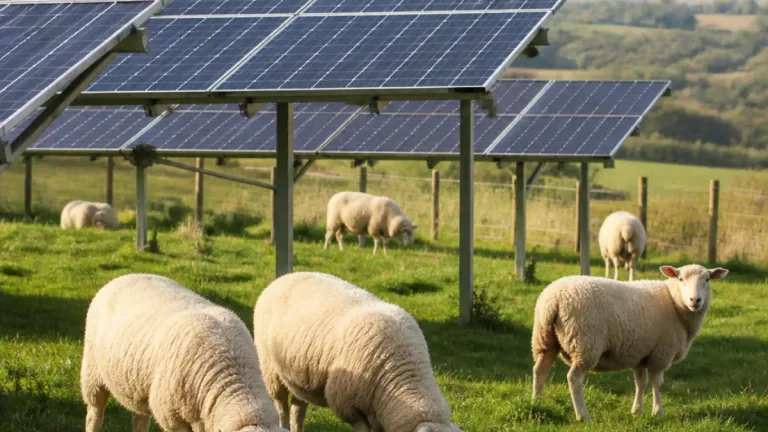
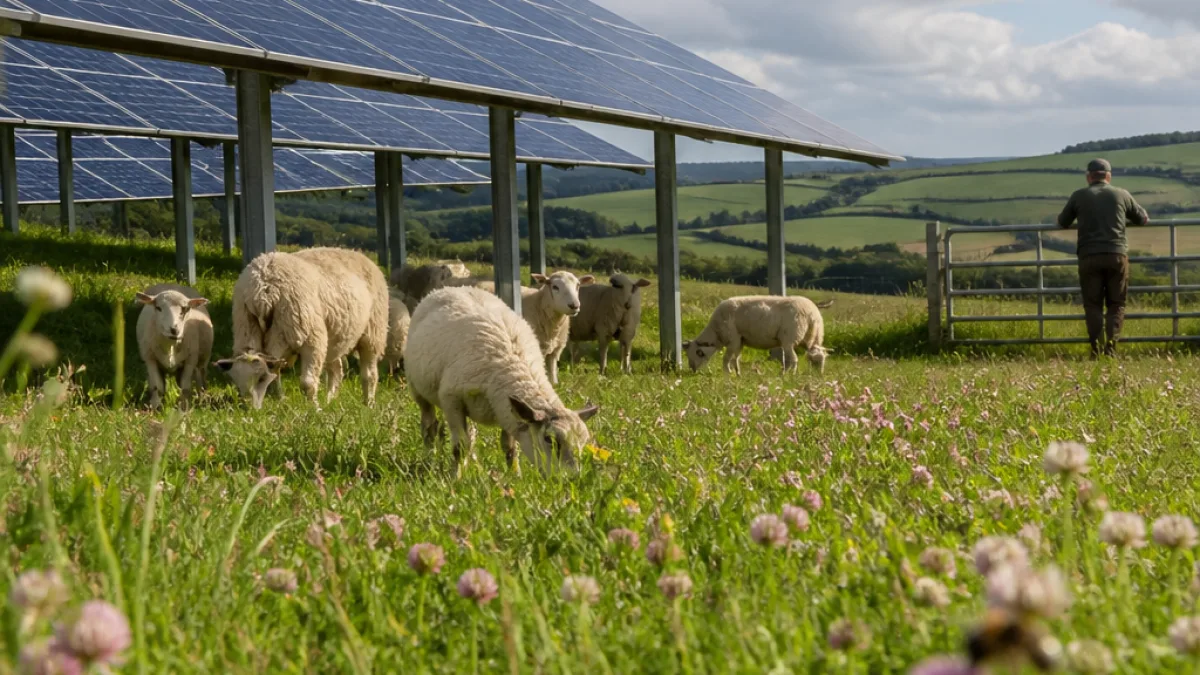
Researchers at Cornell University have reported that grazing two sheep per hectare at a solar farm produced a 38% increase in beneficial insect populations compared with areas where vegetation was managed by mowing, according to a study published in Environmental Research Letters and reported by Phys.org.
Findings from a three-year trial
The three-year study took place at the Cascadilla Community Solar Farm in New York State and compared insect and vegetation outcomes under different stocking densities. At the low stocking rate of two sheep/ha researchers recorded a 38% higher combined count of wild bees, honeybees and ladybirds than in mowed plots; honeybee numbers alone were reported as 83% higher.
At a stocking density of four sheep/ha beneficial insect populations were broadly comparable with mowed areas while vegetation control improved. At the highest stocking density trialled, eight sheep/ha, the researchers observed the most effective vegetation management and noted the animals remained in good condition, but honeybee numbers declined by 45%.
Practical tool to plan flock sizes and contracts
A second study accompanying the field work developed a digital model to help plan grazing at solar sites. The tool is reported to calculate optimal flock size, estimate animal acquisition costs and forecast revenue based on expected vegetation levels. Solar farm operators can also use the model to factor in farmers’ needs and to negotiate contracts that are economically viable for both parties. That United Agrivoltaics is already using the tool when engaging farms in partnerships.
- Site: Cascadilla Community Solar Farm, New York State
- Duration: three-year field trial
- Publication: Environmental Research Letters (reported by Phys.org)
| stocking density | effect on vegetation | effect on beneficial insects |
|---|---|---|
| 2 sheep/ha | Moderate vegetation control | +38% (wild bees, honeybees, ladybirds); honeybees +83% |
| 4 sheep/ha | Improved vegetation control | Roughly comparable with mowing |
| 8 sheep/ha | Most effective vegetation control | Honeybees −45% |
The researchers emphasised the need to balance vegetation management and biodiversity outcomes when selecting stocking rates at agrivoltaic sites.
Implications for the sheep sector
The publications underline two practical opportunities: grazing can provide a nature-friendly alternative to mowing at solar sites, and digital planning tools can help farmers and solar operators structure contracts. Researchers see potential for expanded grazing contracts to provide additional income where domestic lamb and wool production does not meet demand in the United States; around half of the lamb and mutton consumed in the US is imported, primarily from New Zealand and Australia.
United Agrivoltaics’ reported use of the planning tool suggests there is commercial interest in matching flock size to site management objectives. For graziers and advisers considering agrivoltaic work, the research provides concrete, density-specific evidence on trade-offs between vegetation control and pollinator abundance.
Reporting of the studies was carried by Phys.org from the Cornell-led work published in Environmental Research Letters.