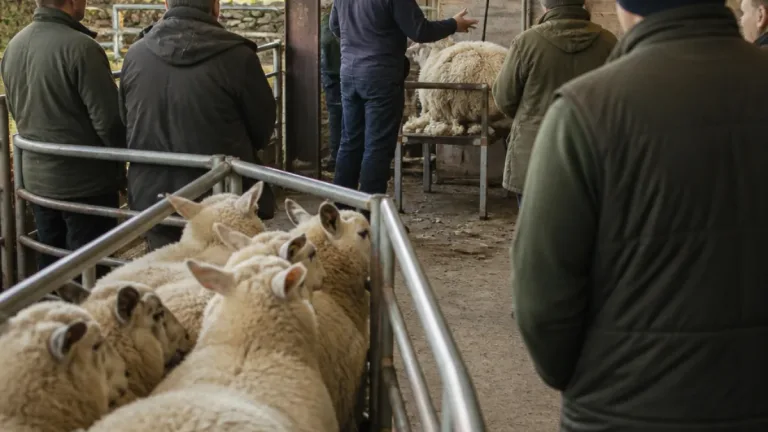
At a hearing of the US International Trade Commission (USITC), representatives of the US lamb industry presented evidence linking the sector’s long-term decline to increased imports and urged the commission to consider safeguard measures that could last for up to eight years. The hearing took place on Friday night (local time) and continued into the early hours for Australian audiences.
What the US industry told the commission
US producers, lotfeeders and processors were represented by lawyer Paul Rosenthal of Kelly Dry and Warren LLP. According to reporting from FarmOnline, Rosenthal told the commission that the US lamb sector had reversed its position in the domestic market: where US-grown lamb once supplied about 75% of domestic consumption, imports now account for the majority and US production makes up less than 25% of the market.
The US industry argued that this shift has been accompanied by a significant fall in the number of farms involved in lamb production, from 101,387 farms to 88,853 farms between 2017 and 2022. They said the decline in processing capacity and numbers of growers is linked to the increased presence of imported lamb and constitutes a substantial cause of serious injury to the domestic supply chain — the legal threshold the USITC must assess when considering safeguard remedies.
Response from Australia and context cited
Australia, a major global lamb exporter and a principal supplier to the US market, challenged the US industry’s evidence before the commission. The Australian government’s position was that the testimony did not meet the high legal standards required to justify safeguard measures under US law.
Australian Ambassador to the US Greg Moriarty told the commission that the decline in US lamb production reflects a longer-term reduction in the supply of domestically produced lambs for slaughter and is driven by factors other than imports. He cited a range of structural issues, including drought and changes in the economics of wool production, such as the removal of wool subsidies and lower wool demand.
Key figures presented to the commission
| measure | figure | note / period |
|---|---|---|
| proposed maximum duration of safeguard measures | up to eight years | as argued by US industry representatives |
| US domestic share (historical) | 75% | previously, as stated by US representatives |
| US domestic share (current) | less than 25% | current share, according to US testimony |
| number of farms | 101,387 → 88,853 | change between 2017 and 2022, cited at the hearing |
The Australian delegation argued that the contraction in US lamb production was influenced by environmental and market pressures, including drought, and by shifts in the wool market that have affected producer returns.
Implications for exporters and the legal test
- The USITC must apply a stringent legal test to determine whether increased imports are a substantial cause of serious injury to the US industry before recommending safeguards.
- Should the commission find in favour of safeguards, measures lasting up to eight years were among the remedies sought by US industry representatives at the hearing.
- Major exporting countries, notably Australia and New Zealand, can participate in submissions and will be directly affected by any restrictions the US may impose.
The hearing marks a formal stage in the USITC’s examination of the claim. The commission’s assessment of causation and injury is central to whether safeguard measures will be proposed and, if so, what form they may take. Reporting from FarmOnline records the submissions made by both the US industry and the Australian delegation; further procedural steps and the USITC’s determinations will follow the evidentiary phase.